By Makutu Manneh
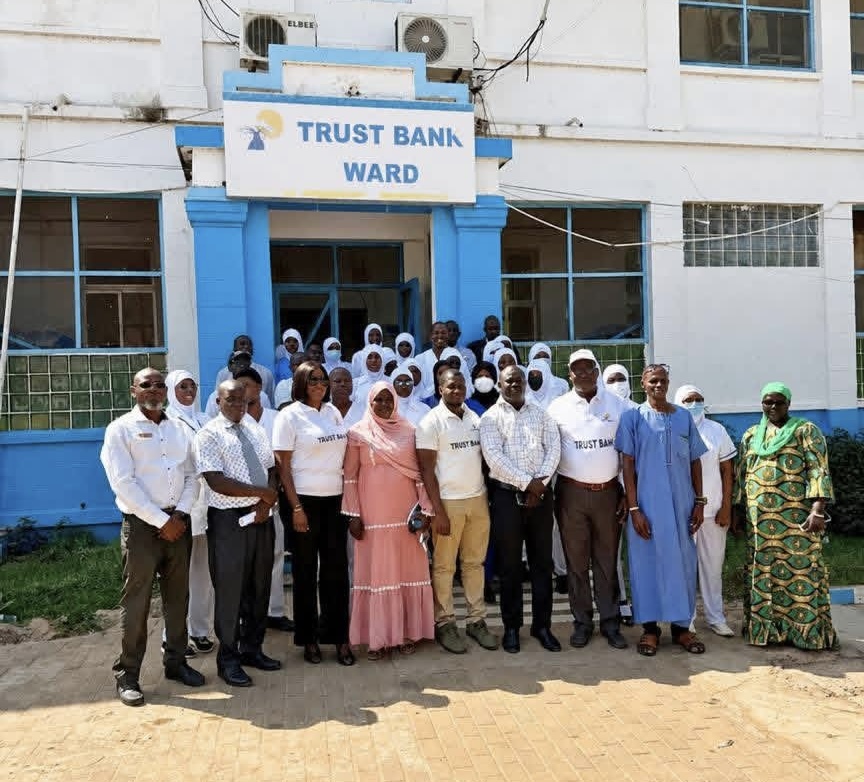
Trust Bank has donated medical equipment and supplies worth D200,000 to Bansang General Hospital as part of its 2026 Corporate Social Responsibility (CSR) initiative, reaffirming its longstanding commitment to strengthening healthcare delivery across The Gambia.
The donation includes an oxygen concentrator, blood pressure monitors, pulse oximeters, mother-and-baby weighing scales, and other essential medical supplies. The equipment was specifically requested by the hospital’s management to address pressing operational needs and enhance patient care.
Speaking at the handover ceremony, Amie Kolleh-Secka, Head of Sales and Public Relations at Trust Bank, highlighted the importance of the bank’s longstanding partnership with Bansang General Hospital, noting that meaningful community development is best achieved through collaboration between institutions working towards a common purpose.
She explained that the bank’s return to the hospital was not merely about presenting another donation but reaffirming a commitment it had maintained for more than a decade.
Kolleh-Secka also acknowledged the critical role Bansang General Hospital plays in providing essential healthcare services to thousands of people across the Central River Region and beyond.
“At Trust Bank we believe that our contribution to society should extend beyond banking services and financials only. We have a responsibility to support initiatives that move lives and promote sustainable community development,” she said.
Receiving the donation, Masirending Njie, Chief Executive Officer of Bansang General Hospital, expressed gratitude to Trust Bank on behalf of the hospital’s management, staff, and board of directors.
Njie described the intervention as timely, highlighting the considerable financial and logistical challenges the hospital faces in maintaining a reliable supply of medical oxygen.
He explained that when Trust Bank approached the hospital to identify its most urgent needs, management prioritized oxygen provision because of the substantial costs associated with procuring and transporting it.
According to Njie, the hospital spends nearly D100,000 weekly on medical oxygen, which it sources from the Kombo area. Each procurement trip, he added, requires approximately 100 litres of fuel for the hospital’s transport truck, placing further strain on its operational budget.
These challenges informed management’s decision to prioritize the acquisition of an electrically powered oxygen concentrator as part of this year’s donation.
“One oxygen concentrator is going to be useful in saving lives,” Njie said.
Abubacarr Jallow, Officer-in-Charge of the Male Ward, also expressed appreciation to Trust Bank, assuring the delegation that the donated equipment and supplies would be put to effective use.
He expressed hope that the partnership would continue, emphasizing the importance of institutional collaboration in improving the quality of healthcare services available to patients.
The donation is expected to help ease pressure on the hospital’s limited resources, strengthen its capacity to deliver essential medical services, and improve patient care.
The intervention forms part of Trust Bank’s broader corporate social responsibility programme, through which the bank continues to support healthcare institutions and promote sustainable community development across The Gambia.



Discussion