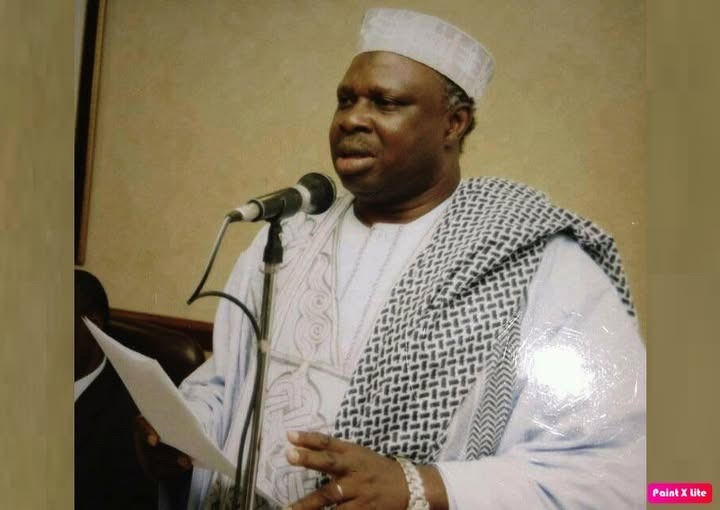
Inna lillahi wa Inna Ilaihi Raji’un
Eight years after his passing, Swaebou Conateh remains a towering figure in Gambian journalism. Founder, editor, mentor, and defender of press freedom, he shaped generations of journalists while championing truth, integrity, and public service. His legacy continues to illuminate the path for a profession facing new challenges in the age of misinformation and political polarisation.
On November 28, 2018, the Gambian media lost one of its brightest stars and most distinguished pioneers. Doyen Swaebou Conateh answered the final call of his Creator, leaving a legacy deeply woven into the fabric of Gambian journalism.
For many of us who chose journalism as a profession and public service, Swaebou Conateh was more than a journalist. He was an institution, a trailblazer, a mentor, a fearless editor, and a custodian of the values that define responsible journalism.
He belonged to that remarkable generation of journalists who bridged the traditional era of journalism in the late 1960s and 1970s with the modern and increasingly complex media landscape of the twenty-first century.
As founder and publisher of the influential News and Report Magazine, Swaebou distinguished himself as a journalist who understood that the press exists not merely to inform but to serve as a watchdog, educator, and defender of the public interest. His pen was sharp, his intellect formidable, and his commitment to truth unwavering.
He never shied away from difficult stories or uncomfortable truths. At a time when journalism in The Gambia faced enormous political and institutional challenges, Swaebou remained steadfast. He embodied courage without recklessness, professionalism without arrogance, and conviction without bitterness.
Those qualities earned him respect across political, professional, and ideological divides.
As an executive member of the Gambia Press Union, he played an instrumental role in strengthening the foundations of press freedom and media independence. He understood that journalism without freedom is merely public relations and that a nation without an independent press is a democracy operating in darkness.
Through his advocacy, leadership, and daily example, he helped create pathways for younger journalists to enter the profession and pursue it with dignity and purpose.
Many journalists of my generation and those who followed benefited, directly or indirectly, from the doors he helped open. He inspired a new breed of reporters, editors, broadcasters, and publishers who continue to shape public discourse in The Gambia today. He championed excellence through quiet mentorship, steady encouragement, and the power of his example.
Beyond his professional accomplishments, many remember his humanity most. He was approachable, generous, and deeply committed to others’ growth. Young reporters could seek his advice. Colleagues could count on his wisdom. Friends could rely on his loyalty. In a profession often marked by rivalry and competition, Swaebou showed that integrity and kindness are strengths.
The news of his passing in 2018 was heartbreaking. Yet death, inevitable as it is, cannot erase a life so meaningfully lived. As Martin Luther observed, “Every man must do two things alone; he must do his own believing and his own dying.” Swaebou confronted both with grace and dignity.
Death is indeed the shadow that follows every human being. It spares neither the powerful nor the powerless, neither the wealthy nor the poor. Yet while death ends a life, it does not end a legacy. Some people leave behind possessions; a few leave behind institutions; the truly exceptional leave behind values. Swaebou Conateh left behind values.
His legacy lives on in every journalist who chooses facts over falsehood, courage over convenience, and public service over personal gain. In an age increasingly dominated by misinformation, propaganda, political polarization, and the relentless competition for clicks and attention, Swaebou Conateh’s example is more relevant than ever.
He belonged to a generation that believed journalism was a public trust. Accuracy mattered. Balance mattered. Credibility mattered. Character mattered.
Today’s journalists would do well to remember those enduring principles. The greatest tribute we can pay to pioneers like Swaebou is not merely to praise them after they are gone but to uphold the standards they lived by.
Eight years after his departure, the void he left remains visible, but so too does the light he shared. His work continues to inspire. His example continues to guide. His memory reminds us that journalism at its best is a noble calling dedicated to truth, justice, and the public good.
People often tell the departed to rest in peace. Yet Swaebou’s life was spent helping the living live in peace through truthful information, informed debate, and responsible journalism.
He gave voice to the voiceless, challenged complacency, and strengthened the democratic space through the power of the written word.
As we remember him today, let us also remember the obligation his generation has entrusted to ours: to defend press freedom, protect journalistic integrity, and ensure that truth remains stronger than fear.
Fare thee well, Doyen Swaebou Conateh. Your pen is silent, but your words still speak. Your journey is complete, but your legacy endures. Your voice has departed this world, but your example continues to inspire generations yet unborn.
May Allah, in His infinite mercy, forgive your shortcomings, accept your good deeds, expand your grave, illuminate your final resting place, and grant you the highest station in Jannatul Firdaus. Ameen.
By Alagi Yorro Jallow


Discussion