
The debate over President Adama Barrow possibly seeking a third term has become one of the era’s major political talking points.
Democracy suffers when people boil complex constitutional issues down to catchy phrases, but it thrives when leaders stick to consistent principles over time.
The real measure isn’t how many terms a leader aims for, but whether citizens can freely decide their fate at the polls.
The Gambia For All (GFA) statement, as reported by Voice Gambia, warns that President Adama Barrow’s reported pursuit of a third term threatens democracy and has once again ignited a national debate about constitutionalism, governance, and political accountability.
Such debates are healthy in any democracy. In fact, they are necessary. Citizens must be free to question their leaders, challenge government decisions, and scrutinize those who seek public office. Yet democratic discourse also requires consistency, historical perspective, and intellectual honesty.
First, a third presidential term under the current constitutional order is a matter of legality, not illegality—the 1997 Constitution, whatever its strengths and weaknesses, does not impose a presidential term limit.
Therefore, should President Adama Barrow choose to seek another mandate, he would be exercising a right available under the existing constitutional framework. The debate, therefore, is not fundamentally about legality but about political judgment and moral preference.
Reasonable people can disagree on whether any president should voluntarily step aside after two terms. That is a legitimate democratic discussion. Less convincing is the attempt to present the issue as an existential constitutional crisis when the Constitution clearly permits such a candidacy.
More importantly, the debate raises a broader question: why have term limits suddenly become the defining measure of democratic commitment? Among the most vocal critics of a potential third term is veteran politician Bakary Bunja Darbo, a former Vice President who served under the People’s Progressive Party government during the First Republic. His public service commands respect, and his right to express his views is beyond question. Yet public figures, particularly those who held the highest offices of state, cannot escape scrutiny of their historical record.

If presidential term limits are presented today as a fundamental democratic principle, it is fair to ask when the public came to accept it. During the long years of the First Republic, when the PPP governed for three decades, where was the campaign for presidential term limits?
During Yahya Jammeh’s twenty-two-year rule, where was the sustained national movement demanding constitutional limits on executive tenure? These questions are not personal attacks. They are questions of political consistency.
A democratic principle that emerges only when it becomes politically convenient inevitably invites scrutiny. Convictions are strongest when applied universally, regardless of who holds power. If term limits are essential today, were they not equally essential yesterday?
The historical record also reveals another complexity. After the July 1994 military coup that overthrew the government he had served, Bakary Bunja Darbo later accepted a ministerial position under the new military administration before resigning. These are matters of public record.
Again, this is not a criticism of the decision itself. Political actors make choices under difficult circumstances. However, it demonstrates why public officials should approach judgments about others with humility. History is rarely as simple as political statements suggest. Beyond historical consistency lies a more fundamental issue. Global experience does not support the assumption that term limits alone guarantee democracy.
Across the world, successful democracies are measured not merely by constitutional restrictions on tenure but by the strength of their institutions. Independent courts, free elections, vibrant media, accountable governments, and active citizens often safeguard against authoritarianism more effectively than the number of terms a leader may serve.
Germany provides a useful example. Former Chancellor Angela Merkel served for sixteen years, not because democratic principles were absent but because voters repeatedly renewed her mandate while democratic institutions remained strong and independent. The lesson is not that leaders should remain in office indefinitely. The lesson is that democracy ultimately depends on institutions and citizens, not on constitutional arithmetic alone. Political maturity requires us to look beyond simplistic formulas.
The real questions confronting The Gambia today are not merely whether one individual should contest another election. They are whether ordinary Gambians have access to jobs, quality education, affordable healthcare, reliable electricity, modern infrastructure, and meaningful economic opportunities. They are whether corruption is being tackled effectively, whether public institutions are becoming stronger, and whether national development is reaching every corner of the country.
These issues should define election campaigns.
Political parties seeking office should persuade voters through policies rather than fear. They should explain how they intend to create employment for young people, strengthen agriculture, improve public services, expand investment, and manage the economy. Citizens deserve competing visions for the future, not endless arguments about personalities.
The Gambian people have already demonstrated a remarkable democratic maturity. In 2016, they achieved something many believed impossible. Through the ballot box, they removed an incumbent leader who had governed for more than two decades.
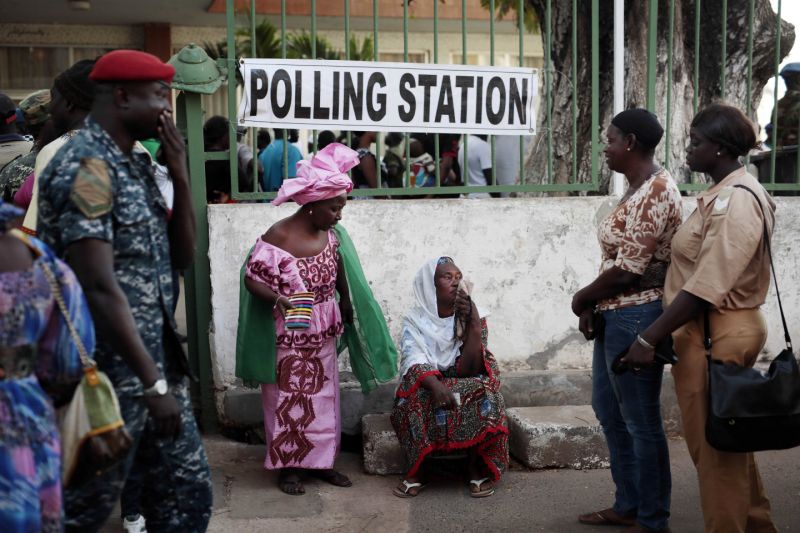
That historic moment sent a powerful message to Africa and the wider world: political power ultimately belongs to the people, not to individuals. The lesson of 2016 was not merely that people could change a government. No leader is invincible when citizens are determined to exercise their democratic rights. That achievement should give us confidence, not fear.
If Gambians could remove President Yahya Jammeh through a democratic process after twenty-two years in power, then they surely retain that power today. The ballot box remains the ultimate judge in a democratic society.
For that reason, excessive alarmism about a constitutional third term risks underestimating the intelligence and sovereignty of the Gambian electorate. The question should not be whether a legally qualified candidate is permitted to run. The question should be whether that candidate can persuade voters to support his vision for the country. Democracy is strongest when voters decide.
Ultimately, the discussion about a third term should be neither a legal panic nor a moral crusade. It should be an opportunity to reflect on the kind of political culture we wish to build.
A culture where we apply principles consistently. A culture where leaders are judged by their records. A culture where political parties compete on ideas and policies. And a culture where citizens, not politicians, have the final word. Slogans about term limits alone will not secure The Gambia’s future. Strong institutions, informed citizens, competitive elections, and leaders who can earn the people’s trust will secure it.
In the end, democracy’s greatest safeguard is not a constitutional clause. It is the enduring power of citizens to hold every leader, past, present, and future, accountable at the ballot box.
The future of The Gambia will not be determined by the number of terms debated in political statements, but by the quality of leadership offered to the people and the wisdom of voters at the ballot box.
By Alagi Yorro Jallow


Discussion