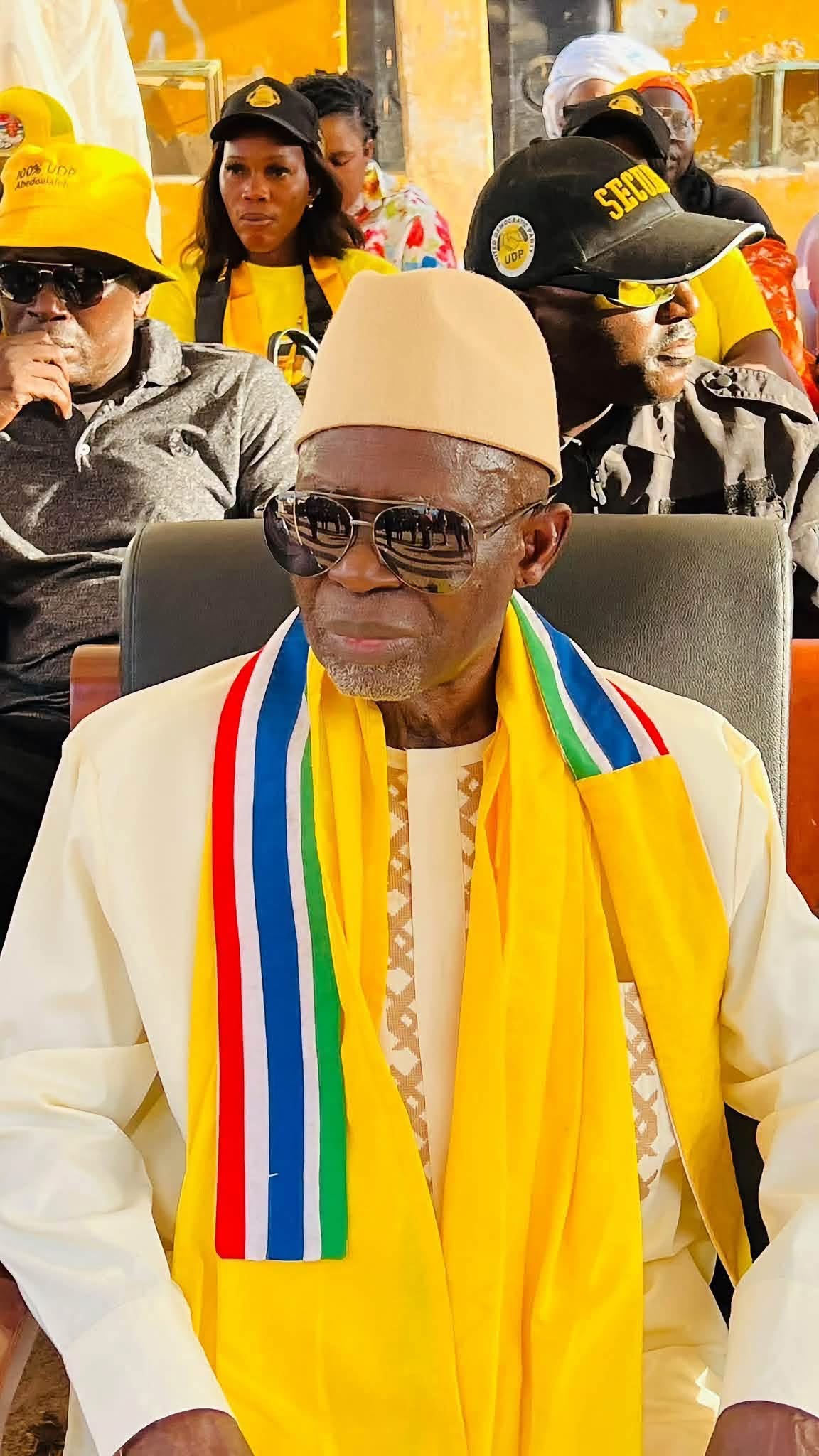
United Democratic Party (UDP) activist Bamba Mass has warned against what he described as attempts by some elites to fuel ethnic tensions in The Gambia for political and personal interests.
Speaking on Gagigo News Network, Mass criticized recent remarks by Imam Baba Mutar Leigh, saying they could contribute to ethnic divisions in a country with a long history of inter ethnic relationships and marriages.
Mass said he was particularly disappointed by Imam Leigh’s remarks because of the historical relationship between the Mandinka community and Imam Leigh’s family.
He recalled that Imam Leigh’s grandfather, an Islamic scholar, was welcomed by the Mandinka community in Badibou Alkali Kunda, where he was given land to build a home, an Islamic school (dara) and a mosque.
According to Mass, the support continued when Imam Leigh’s father later moved to Serrekunda, where he said the local Mandinka, or Badibunka, community supported and protected him.
Mass further claimed that members of the Mandinka community fought on two occasions over the appointment of Imam Leigh’s father as Chief Imam in Serrekunda and later over the appointment of Baba Leigh as Chief Imam in Kanifing.
He said these historical ties contributed to his disappointment with Imam Leigh’s recent remarks, adding that he considers the religious leader a brother and a role model.
Mass also rejected the idea of a strict ethnic divide between Mandinkas and other communities in The Gambia, pointing to the country’s history of inter-ethnic marriages.
He cited President Adama Barrow, whose father is Mandinka and mother is Fula, as an example of the connections between different ethnic groups. He also mentioned lawyer Lamin Fatty, saying some of his brothers carry the surname Jallow, and musician Jaliba Kuyateh, whom he said was born to a Wolof mother and a Mandinka father.
Mass argued that such family connections demonstrate the close relationships that have existed among different ethnic communities in The Gambia for generations.
He accused some educated elites of using ethnic differences to advance their own political or personal interests, describing the approach as a form of “divide and rule.”
Mass said such divisions have not benefited ordinary Gambians and could undermine national unity.
He also criticized both sides of the ethnic debate, rejecting claims that minority groups should fear the Mandinka community while also condemning statements by some Mandinkas suggesting that they “own” the country.
According to Mass, such statements are harmful regardless of the intention behind them and can contribute to ethnic tensions.
Providing historical context, Mass said the territory now known as The Gambia was made up of different traditional kingdoms and political entities before colonial rule, including Niumi, Jarra, Kombo and Jokadu, as well as areas connected to Sine Saloum.
He said British and French colonial authorities later altered existing political structures and brought different territories and communities under the name The Gambia.
Mass described tribalism as harmful to the country and called on Gambians to reject ethnic divisions and preserve the relationships that have existed among the country’s communities for generations.


Discussion