
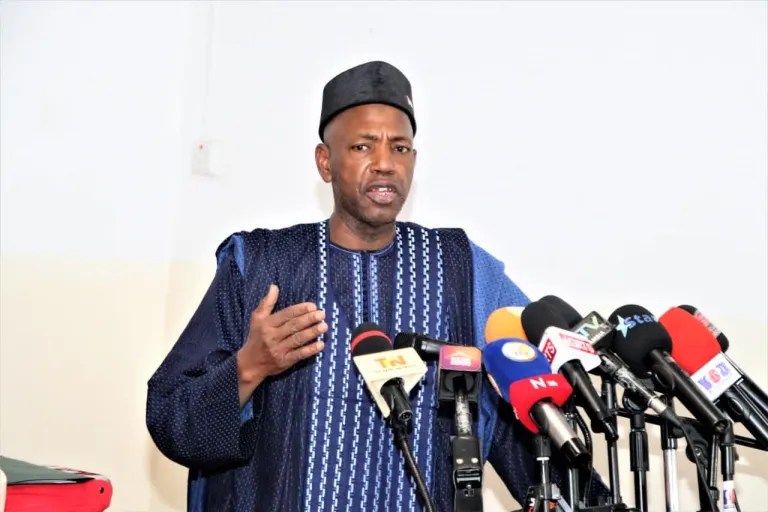
This question was posed to Halifa Sallah and he said the following:
State administration should be above partisan politics. This is precisely why public servants have security of tenure up to pensionable age. Over the years governments have increased the power of the executive to control the senior management of public institutions, thus sacrificing competence to loyalty of the executive.
Consequently, policy making is largely influenced by the whims and carprices of executive authority. It is therefore not uncommon to witness shakeup of management of public institutions based on the perception of executive authority.
In The Gambia, the long challenges characterising, availability, accessibility and affordability of electricity supply are yet to be fully assessed and evaluated to provide a lasting solution. Partisan consideration has motivated executive authority to focus on quick fixes rather than on a lasting solution.
The supply energy chain, comprising generation, transmission and distribution must be linked to the consumption needs of homes, businesses and institutions.
Sustainability could only be guaranteed if generation, transmission and distribution could satisfy demand. Consequently, not much thought is given to the concept of energy sovereignty. Such sovereignty could take two perspectives. It could be the national energy sovereignty or regional energy sovereignty. The two are interlinked.
First and foremost, each nation must strive to generate sufficient electricity and provide transmission lines throughout the nook and cranny of the country and ensure that distribution lines are connected to every home, institution and enterprise. This must be made to be a matter of priority.
Secondly, each region must also have an energy pool from which all members could be be supplied with electricity to deal with emergency or to consolidate cooperative energy sovereignty.
The current dilemma is evident. There is no national energy sovereignty nor a regional cooperative energy psovereignty. The country has through its donor partners expanded transmission and distribution capacity but has limited generation capacity.
Consequently, transmission and distribution needs have exceeded generation capacity. There was hope that the country’s neighbours and sub region would generate sufficient energy to be purchased by The Gambia.
Unfortunately, it is available intermittently and it is evident that sustainability of purchasing electricity from the regional power network cannot be guaranteed.
This is the reason why the country is incapable of overcoming shortages and load shedding. A drive towards energy sovereignty is a must if load shedding is to be put behind us.

Discussion