By Momodou Gagigo
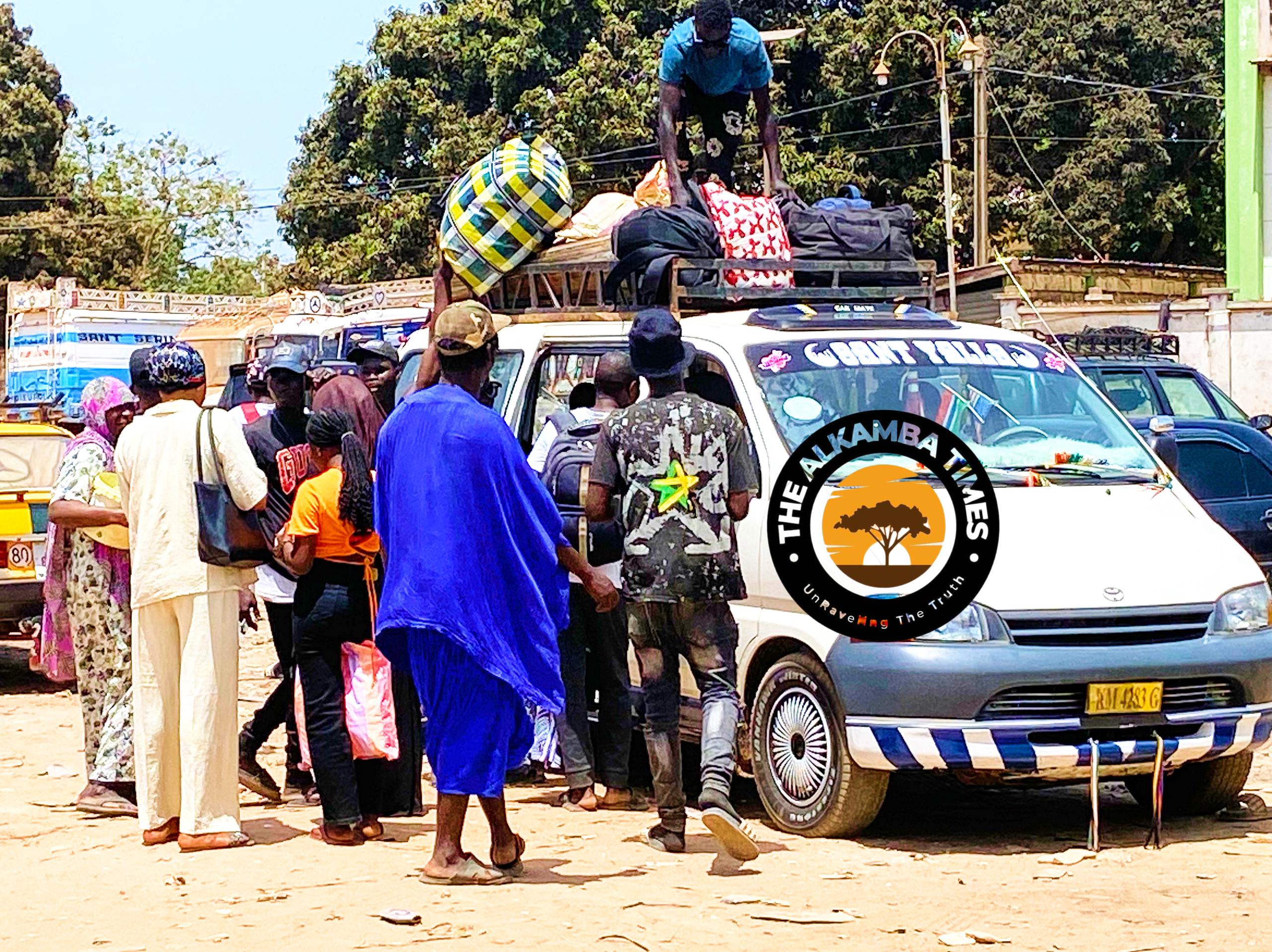
As Muslims across The Gambia prepare to celebrate the holy feast of Tobaski with family and loved ones, many travellers are now facing another painful reality — the sharp rise in transportation costs.
With barely a day left before the feast, commercial transport fares to provincial towns and villages have skyrocketed, leaving many families struggling to afford the journey home. Every year, thousands of Gambians travel from the Greater Banjul Area to their native villages to observe Tobaski traditions with relatives, but this year, many say the cost of transport is becoming unbearable.
Currently, passengers traveling from Brikama are reportedly being charged D600 to Soma, D700 to Farafenni, and as much as D1200 to Basse. For larger families, the costs are even more overwhelming.
For Musa Baldeh, a father preparing to travel with his family to Choya village in Niamina, the excitement of Tobaski has been overshadowed by financial stress.
“I have four people to pay for, and each fare is D700,” he lamented. “That means I will spend D3,500 just to take my family to the village. It is very difficult.”
Salimatou Bah shared similar frustrations as she prepared for the long journey to Basse with her husband and son.
“This journey is no longer easy,” she said. “The three of us will have to pay D3600 just to reach Basse. Everything is expensive now.”
While passengers continue to complain about the burden, commercial drivers insist that the increase is not driven by greed but by the harsh economic realities they themselves face.
Mansour Njie, a commercial driver operating on the provincial route, explained that rising fuel prices have made transport business increasingly difficult.
“Fuel is very expensive,” he said. “Sometimes after transporting passengers and refilling the vehicle, you are left with almost nothing.”
Another driver, Ablie Jallow, said the Tobaski travel rush is mostly a “one-way business,” as drivers often return to Kombo with empty vehicles after dropping passengers upcountry.
“When we take people to the provinces, there are usually no passengers coming back,” he explained. “That is why many drivers are forced to charge higher fares to survive.”
As Tobaski draws closer, many Gambians now find themselves caught between the desire to reunite with family and the harsh cost of getting there. For some families already battling high food prices and economic hardship, the rising transport fares have added yet another burden to what should be a joyful and spiritual celebration.


Discussion