
Ten presidential aspirants have submitted their nomination papers to The Gambia’s Independent Electoral Commission (IEC) during the first week of the nomination exercise, outlining promises on employment, healthcare, security, infrastructure and governance ahead of the December 5, 2026 election.
The ten aspirants identified in the reports comprise six political party candidates and four independents. The nomination exercise began on November 3 and is scheduled to end on November 14.
Independent candidate Salieu Jallow and Modou Lamin Sima of the Alliance of Progressive Citizens (APC) were among the first to appear before the Commission on November 3.

Jallow promised to create thousands of jobs for young people, tackle corruption and improve national security. Asked about his nomination deposit, he said: “We thought we would be given a bank slip to go and pay, rather than coming with cash. But it will be paid.”
Sima identified unemployment as a major challenge and promised to improve healthcare through the provision of hospital beds, medicines and medical equipment.
“If elected, the first thing I will address is unemployment,” he said.

On November 5, Bakusa Dukureh of the Gambia Labour Party (GLP), independent aspirant Alieu Sowe and Ansu Sanneh of the National Builders Party (NBP) presented their papers.
Dukureh, who holds Gambian and American citizenship, said he had no intention of renouncing his American nationality when questioned about it.
“I am not going to renounce my citizenship anytime, anywhere and anyhow soon,” he said. Job creation is central to his party’s campaign.
Sowe, a retired military officer, promised to tackle insecurity within 30 days of assuming office, saying Gambians should be able to move around with their valuables without fear of criminals.
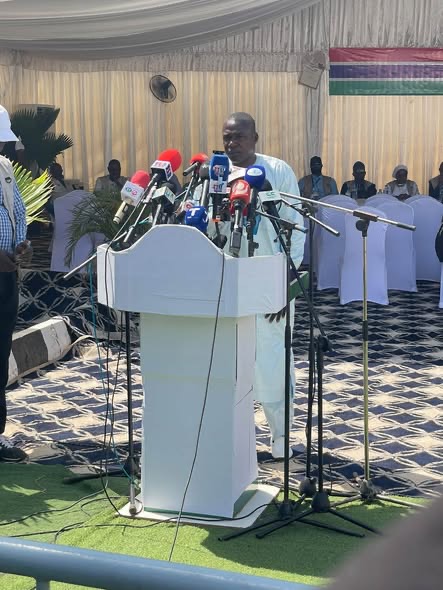
Sanneh presented a 51-policy development blueprint covering education, healthcare, agriculture and infrastructure.
His proposals include a new city, regional airport facilities and additional ferry terminals.
On November 6, Kebba Madi Bojang of the National Democratic Party (NDP) and independent aspirant Bakary K. Badjie also submitted their papers.

Bojang’s political alliance has promised to create 150,000 jobs, improve food production and expand access to clean drinking water.
Badjie, a National Assembly Member for Foni Bintang Karanai, pledged to fight corruption and strengthen accountability.
“Building our nation is now, and the responsibility that lies ahead of us is more than political parties. The responsibility that lies ahead of us is more than tribe,” he said.
On November 7, Talib Ahmed Bensouda, representing the United Movement for Change (UMC) under Coalition 2026, submitted his papers amid a gathering of supporters.
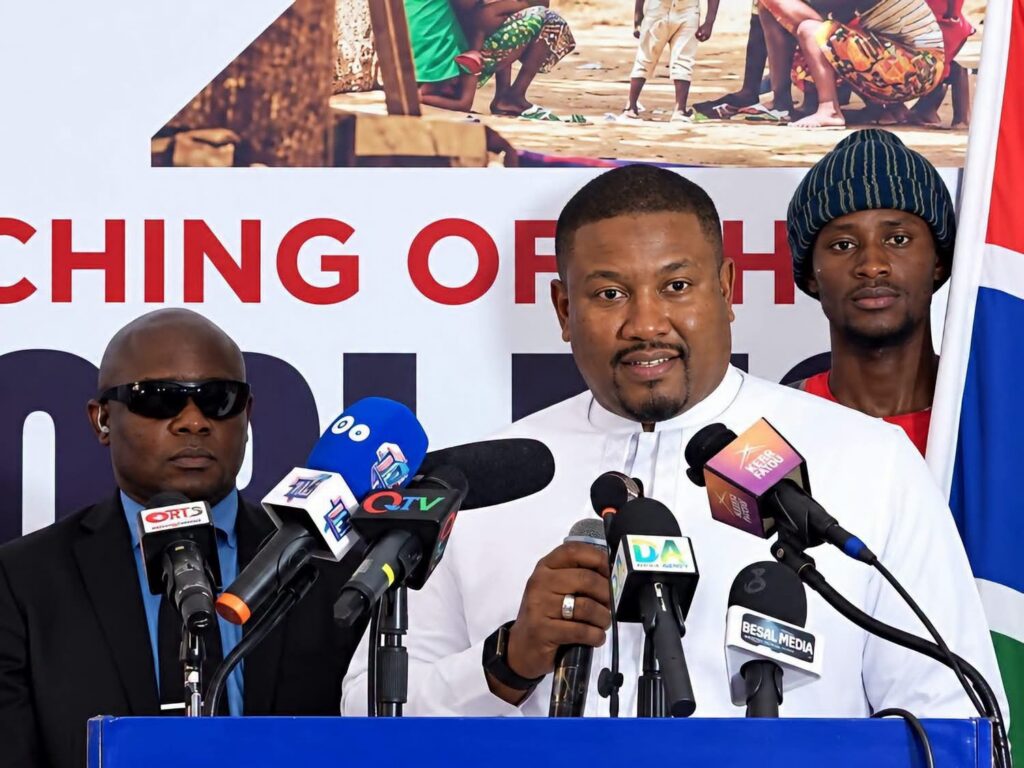
He pledged to tackle poverty and improve governance, saying: “I, Talib Ahmed Bensouda, will be your soldier on the front line to lift you from darkness into prosperity and into the light.”
Independent aspirant Joseph Henry Joof, a former Attorney General and Minister of Justice, also presented his papers.
He called for strict enforcement of educational requirements for presidential candidates.
“If anybody is not a product of completing senior secondary school education, he should not contest,” he said.
Ebrima Tabora Manneh, leader of the People’s Alliance Party (PAP), submitted his papers on November 8, promising to redirect the country’s economy, security and development.

“Any sector that you look at in this country is a failure,” he said, criticising the country’s development record.
Meanwhile, IEC Chairman Joseph Colley said the nomination exercise was progressing according to schedule. He also confirmed that three aspirants had withdrawn their bids.
The Commission is expected to scrutinise the submitted documents before determining which candidates have met the legal requirements to contest the December 5 election.
By Adama Makasuba




Discussion