
Supreme Court Closes Plaintiffs’ Case
By Yankuba Jallow & Mariama Marong
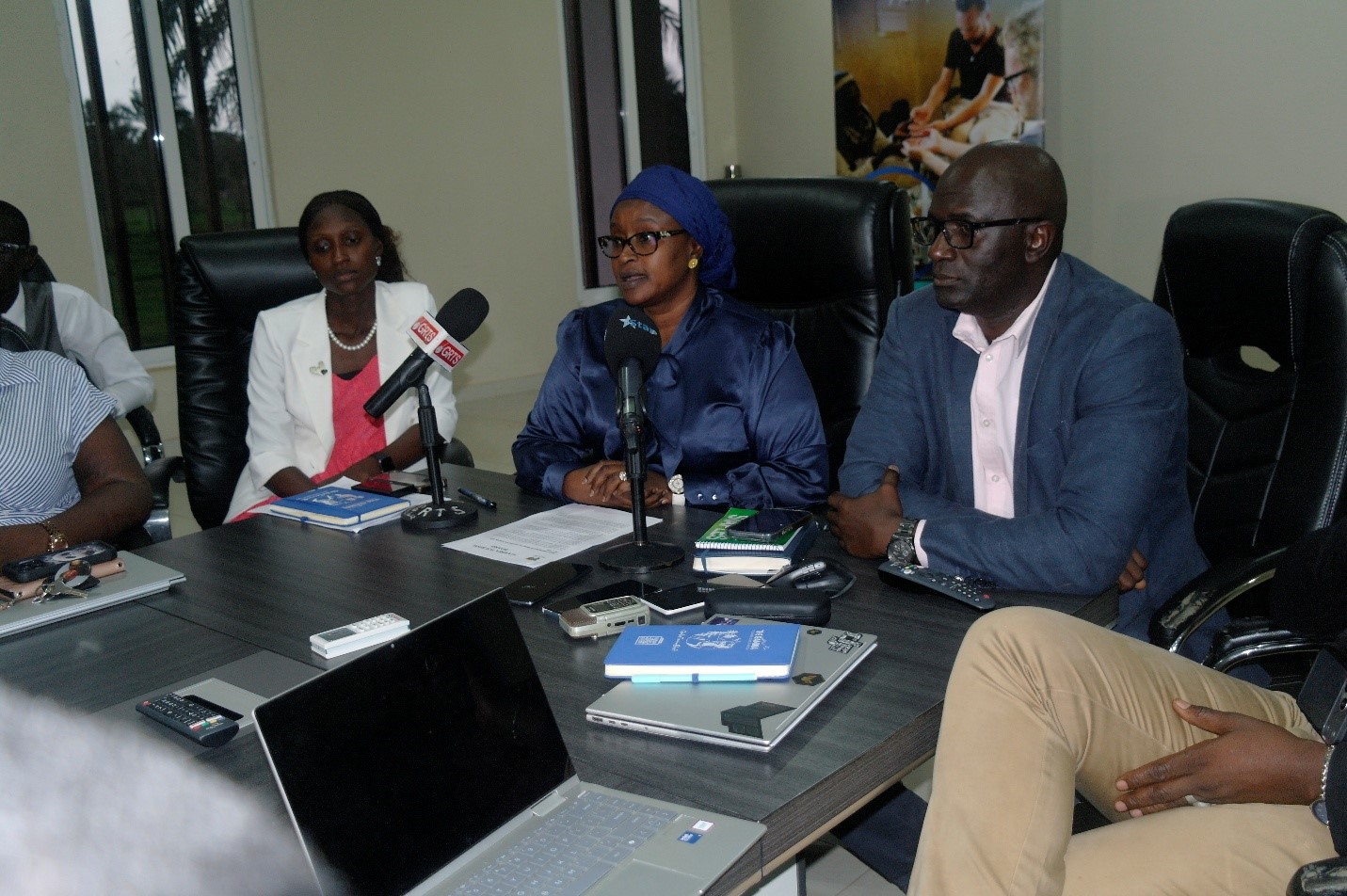
The Supreme Court on Tuesday closed the plaintiffs’ case in the constitutional challenge to The Gambia’s law prohibiting female genital mutilation (FGM) after the plaintiffs failed to produce their final witness, and ordered the defendants to begin presenting their case. So far, two witnesses have testified for the Plaintiffs, who are seeking to overturn the ban. The third witness was expected to provide technical aspects of the case. Counsel Lamin J. Darboe told Foroyaa that he is satisfied with the evidence of the two witnesses.
Chief Justice Hassan B. Jallow, who presided over the case withdrew from the case and was replaced by another judge. The suit challenges the constitutionality of The Gambia’s law criminalising female genital mutilation. The plaintiffs are asking the Supreme Court to determine whether the legislation that bans the practice is consistent with the Constitution, while the Attorney General is defending the validity of the law.
The individuals and groups involved in the case are Almamy Gibba, Yassin Fatty, Nano Jawla, Kadijatou Jallow, Concerned Citizens, Islamic Enlightenment Society, Women’s Association for Islamic Solidarity, and Gambian Women are Free to Choose. Yassin, Nano, and Kadijatou, who hail from Kuntaur in the Central River Region, were convicted by the Kaur Magistrate’s Court for their involvement in the practice of female circumcision.
They want the Supreme Court to declare that the amendment of Section 32 of the Women’s Act of 2010 and the introduction of new Sections 32A and 32B in the Women’s (Amendment) Act (Act Number 11 of 2015), which prohibits the practice of female circumcision, are contradictory to the 1997 Constitution of the Gambia. They argued that these changes are inconsistent with Sections 17(1) and (2), 25(1)(c), 28(1) and (2), 32, and 33(2) and (3) of the 1997 Constitution, and therefore should be deemed ultra vires, null, and void.
They want the court to invalidate Sections 32A and 32B of the Women’s (Amendment) Act No. 11 of 2015 from the Women’s Act of 2010, leaving only Section 32 of the original provision of the Women’s Act of 2010 in place.
The matter came before a panel of the Supreme Court presided over by Justice Cherno Sulayman Jallow.
Senior Counsel Lamin J. Darboe, representing the plaintiffs, informed the court that they had intended to call one final witness, who resides in the United States, but were unable to bring her to The Gambia because of financial constraints.
Darboe told the court that the witness could not travel because the plaintiffs were unable to meet her transportation costs. He applied for her affidavit statement to be admitted into evidence.
Justice Jallow observed that the issue before the court was not limited to the admission of the affidavit but also concerned the witness’s availability for cross-examination by the other parties. Jallow emphasised that the matter is not only about the tendering of the document, but extends to whether the witness will be available for cross-examination.
In response, Darboe informed the court that he would prefer the witness to testify virtually.
Justice Jallow then invited submissions from counsel representing the other parties.
Counsel Yassin Senghore opposed the application, arguing that the plaintiffs had previously been given an opportunity to file the witness’s affidavit and make arrangements for her virtual testimony. She referred the court to earlier proceedings before a single judge in chambers, where, according to her, Darboe had been directed to file the affidavit statement and facilitate the witness’s virtual appearance.
Senghore submitted that returning to court with the same application demonstrated a lack of diligence in prosecuting the matter. She urged the court to close the plaintiffs’ case and direct the defendants to begin presenting their evidence.
State Counsel A.K. Wakawa, representing the Attorney General, associated himself with Senghore’s submissions.
“There is no sign of diligence to prosecute the case,” Wakawa told the court.
He, likewise, asked the court to close the plaintiffs’ case and order the defence to open its case.
Senior Counsel Lamin K. Mboge, representing the intervenor, GAMCOTRAP, also supported Senghore’s position. GAMCOTRAP was not a party to the case, but requested to be added to the case based on public interest.
“The proper order to make here is to order the Plaintiffs’ case closed and for the Defendants to open their case, to start even today,” Mboge submitted.
He described the matter as “very sensitive and delicate” and urged the court to ensure that it proceeds expeditiously so that all parties would know the outcome.
Before delivering the ruling, Justice Jallow addressed Darboe, saying: “I want to give you one more opportunity.” Darboe, however, informed the court that he would leave the matter to the court’s discretion.
The court subsequently ruled that the plaintiffs’ case be closed and directed the defendants to begin presenting their evidence.
Counsel Wakawa representing the Attorney General indicated that its first witness would be the Deputy Clerk of the National Assembly, Aji Sainey Kah, who had been summoned to produce documents before the court. Although Kah was present in court, the proceedings could not continue because no witness statement had been filed on her behalf as required under the Supreme Court Rules. The case was adjourned to 13 July 2026, when the defence is expected to open its case.
Discussion