The State has filed an amended notice of appeal containing 17 grounds challenging the High Court’s acquittal of Ousainou Bojang and Amie Bojang, seeking to overturn the judgment and secure convictions.
The appeal, signed and filed by Director of Public Prosecutions A.M. Yusuf on April 29, 2026, challenges the entire judgment delivered by Justice Ebrima Jaiteh on March 30, 2026. The matter is scheduled to be heard by the Court of Appeal before a three-member panel comprising Presiding Justice N. Salla-Wadda, Justice B.V.P. Mahoney, and Justice A. Saho-Ceesay. Proceedings remain pending as the court considers the State’s motion for leave to regularise its filing.
The State is seeking two principal orders: the setting aside of Justice Jaiteh’s judgment and its replacement with convictions and sentences commensurate with the offences charged.
A central issue in the appeal concerns the treatment of confessional evidence. The State argues that the trial judge erred by requiring corroboration of Ousainou Bojang’s cautionary statement, Exhibit P6, which had been admitted into evidence following a voir dire. Prosecutors contend that a direct and unequivocal confession can, on its own, sustain a conviction and that Bojang’s subsequent retraction during his defence should not have diminished its evidential value.
The State further argues that the trial judge failed to consider the confession alongside the unchallenged testimony of prosecution witnesses, including PW3 and PW13, resulting in what it describes as a selective assessment of the prosecution’s case.
Regarding the alibi defence, prosecutors contend that the judge erred in assigning probative value to an alibi raised for the first time during the defence stage. The State argues that an alibi should be raised at the earliest opportunity, preferably during police investigations, to allow verification. It maintains that accepting the late alibi led to a miscarriage of justice in light of what it describes as compelling evidence linking Bojang to the offences.
The appeal also challenges the judge’s approach to identification evidence. The State submits that the requirement for positive visual identification under R v Turnbull imposed an unnecessary burden, arguing that Bojang’s identity had already been established through his alleged confessions and the testimony of multiple prosecution witnesses.
The State further contests the judge’s treatment of evidence relating to Bojang’s departure from the jurisdiction shortly after the incident. Prosecutors argue that his flight should have been considered as circumstantial evidence of consciousness of guilt rather than being accepted as consistent with his explanation that he fled after a woman posted a naked photograph of him on social media.
On the issue of the weapon used, the State argues that the judge wrongly found inconsistencies in the prosecution’s evidence. It maintains that testimonies from PW1 and PW2 consistently identified the weapon as a pistol and that this was supported by ballistic evidence from PW12, Bubacarr Bah, who identified it as a 9mm Makarov pistol.
Several grounds of appeal target the admission of digital and documentary exhibits. The State challenges Exhibit D38, an audio recording obtained from Kerr Fatou Online Media, arguing that it lacked a proper legal foundation because the defence witness who downloaded it had no direct knowledge of its origin or authenticity. The State also points to discrepancies regarding the computer allegedly used in the download process.
Exhibit D37, a WhatsApp printout produced from defence counsel’s computer, is challenged as secondary evidence because the original phone was not tendered. The State also raises concerns about Exhibits D16 and D36, Africell call logs, citing identical timestamps with the related summonses and questioning the authenticity of one document bearing a “High Court” inscription.
Ground 14 alleges that the trial judge erred by evaluating each piece of prosecution evidence separately rather than assessing the cumulative effect of all the evidence. According to the State, this approach led to an incorrect conclusion that the prosecution had failed to establish Bojang’s identity.
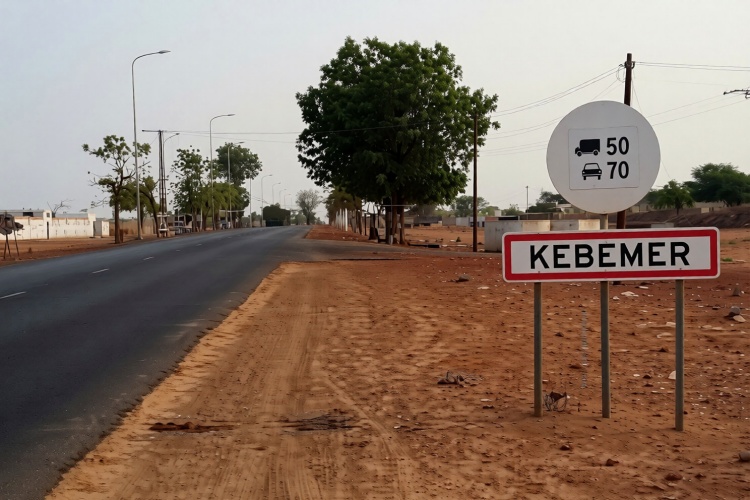
With respect to Amie Bojang’s acquittal on the charge of being an accessory after the fact, the State argues that the judge’s assessment of the evidence against Ousainou Bojang directly influenced her discharge. Prosecutors contend that evidence was overlooked indicating that she arranged transport that facilitated Ousainou Bojang’s departure to Senegal on September 13, 2023.
In its final ground of appeal, the State argues that the judgment was unreasonable and unsupported when considered against the totality of the evidence presented at trial. The prosecution has also reserved the right to file additional grounds upon receipt of the complete trial record.


Discussion