
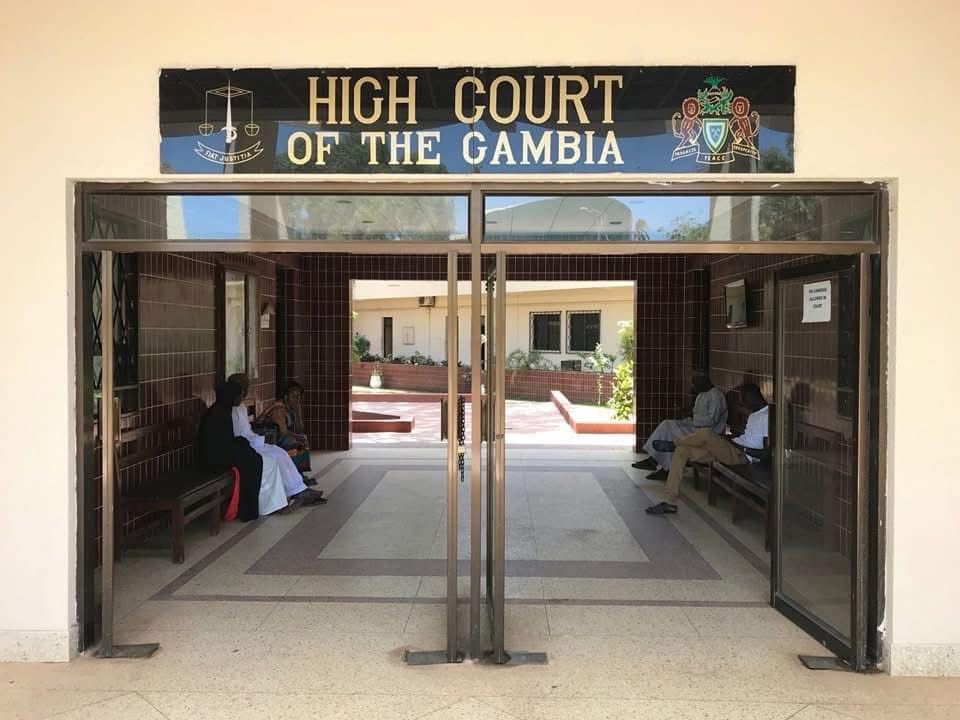
A former Permanent Secretary at the Ministry of Lands, now serving as Permanent Secretary at the Ministry of Fisheries, on Monday testified before the High Court on how lands forfeited from former President Yahya Jammeh were managed following the Janneh Commission.
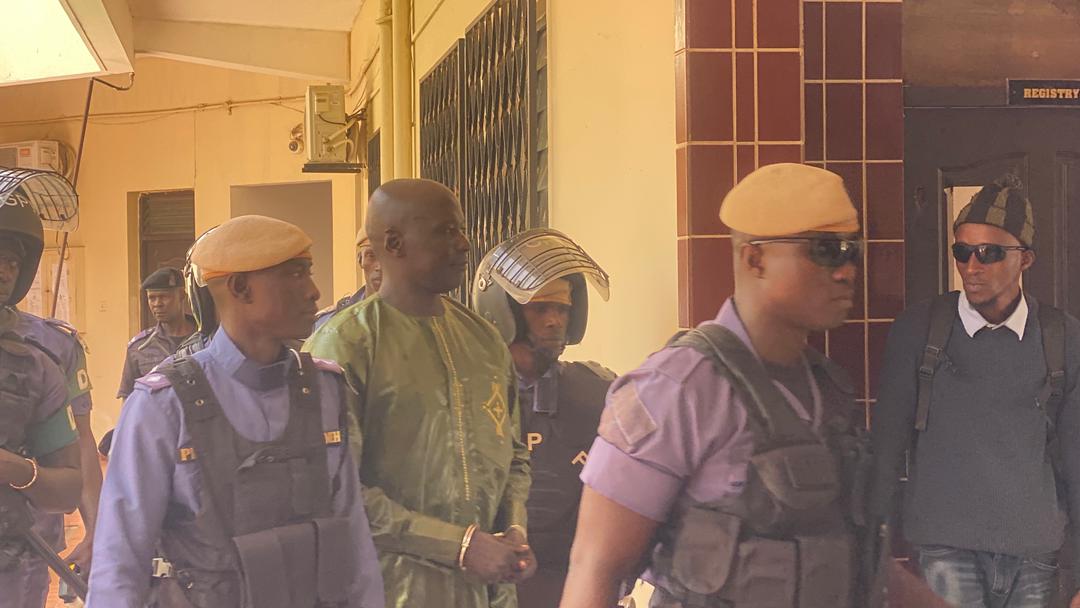
The witness, Buba Sanyang, appeared in an ongoing case involving former Lands Minister Abba Sanyang and six other accused persons. He told the court that he worked at the Ministry of Lands between 2017 and 2023, serving as an adviser and providing technical guidance on governance matters, while also supervising daily operations.
Sanyang said he recalled a 2022 incident involving land in Kassa Kunda Village, which had been forfeited from the former president. According to his testimony, he became aware that the land had been sold to the Village Development Committee (VDC) by the then Minister of Lands, Abba Sanyang.
Explaining the term “forfeited properties,” Sanyang said these were assets identified by the Janneh Commission and transferred to the state. He added that some properties underwent further review through a ministerial process supported by a technical committee, with outcomes including reversion to original owners, retention by the state for planning, or other uses.
He told the court that the ministerial committee included the ministers of lands, tourism, and justice, and that it worked alongside a technical committee that reviewed the commission’s findings and made recommendations for Cabinet approval.
On the scope of the forfeited properties, Sanyang said they affected “hundreds of communities,” including Kassa Kunda, Sifoe, Brufut, and Georgetown.
During his testimony, Sanyang began outlining how the former president acquired some of the lands, stating that they were obtained through donations, purchases, and, in some cases, forceful acquisition. However, the presiding judge, Justice Ebrima Jaiteh, interrupted, stating that the method of acquisition was not relevant to the current proceedings.
Justice Jaiteh emphasized that the Janneh Commission had already made determinations on the properties, noting that its decisions carry the weight of a High Court judgment. He warned against revisiting those findings, stating that any challenge should be directed to the Court of Appeal.
State Counsel S.L. Jorbateh responded that the prosecution’s position was aligned with concerns raised by some communities, who claim they were unaware of how the lands were transferred to the former president.
The judge maintained that the forfeiture process had already been concluded and that the court should proceed on that basis.
Sanyang further explained that the ministerial committee was established to review forfeited lands and make recommendations to Cabinet, with support from a technical committee that examined the Janneh Commission’s report in detail.
He noted that administrative steps included the cancellation of leaseholds in official records and that most forfeited lands were returned to the state, while others were sold or allocated back to communities.
According to Sanyang, the lands in question included islands, wetlands, forests, and undeveloped areas. While the technical committee provided recommendations on their use, final decisions rested with the ministers.
He added that communities could formally apply to reclaim forfeited lands, either in full or in part. In the case of Kassa Kunda, Sanyang confirmed that the community had submitted a request for the land.
He also told the court that although not all forfeited lands were returned to the Ministry of Lands for planning purposes, a significant number were. Specifically, he confirmed that the Kassa Kunda land was among those returned to the ministry.
The case was adjourned to 27 April 2026 at 11:00 a.m. for the continuation of the prosecution’s first witness testimony.

Discussion