
By Yankuba Jallow
The chairman of the West Coast Region Poultry Innovation Platform, Ibrahim Sanyang, has warned that the most urgent threat facing poultry farmers in The Gambia is not production, but the absence of a reliable market, a challenge he said is already forcing farmers to destroy their produce, with Sabiji Farm cited as a striking example.
“Last rainy season, we threw over 5000 crates of eggs. We dug mass graves and buried them. This is because there is no market,” said Abdoulie Darboe of Sabiji Farm.
His experience, farmers say, is not isolated. Across the country, many poultry producers report similar losses, with eggs going bad due to the lack of buyers and weak distribution systems.
“Now we are producing and cannot sell,” Darboe said. “We have over 2000,000 crates right now that we cannot sell.”
He explained that some farms produce up to 100 crates per day, yet struggle to move their products.
“Some of the poultry farms produce 100 crates per day and cannot sell them, which is affecting them,” he said.
For Sanyang, these realities reflect a deeper structural problem that requires urgent attention.
“There is no organised, reliable and well-functioning market system for poultry products in this region, or in the Gambia at large,” Sanyang said.
“Our farmers produce, but they struggle to sell at their prices.”
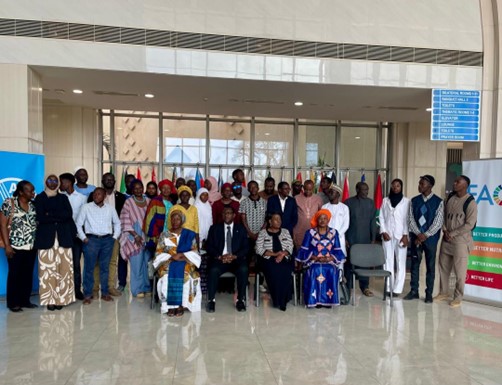
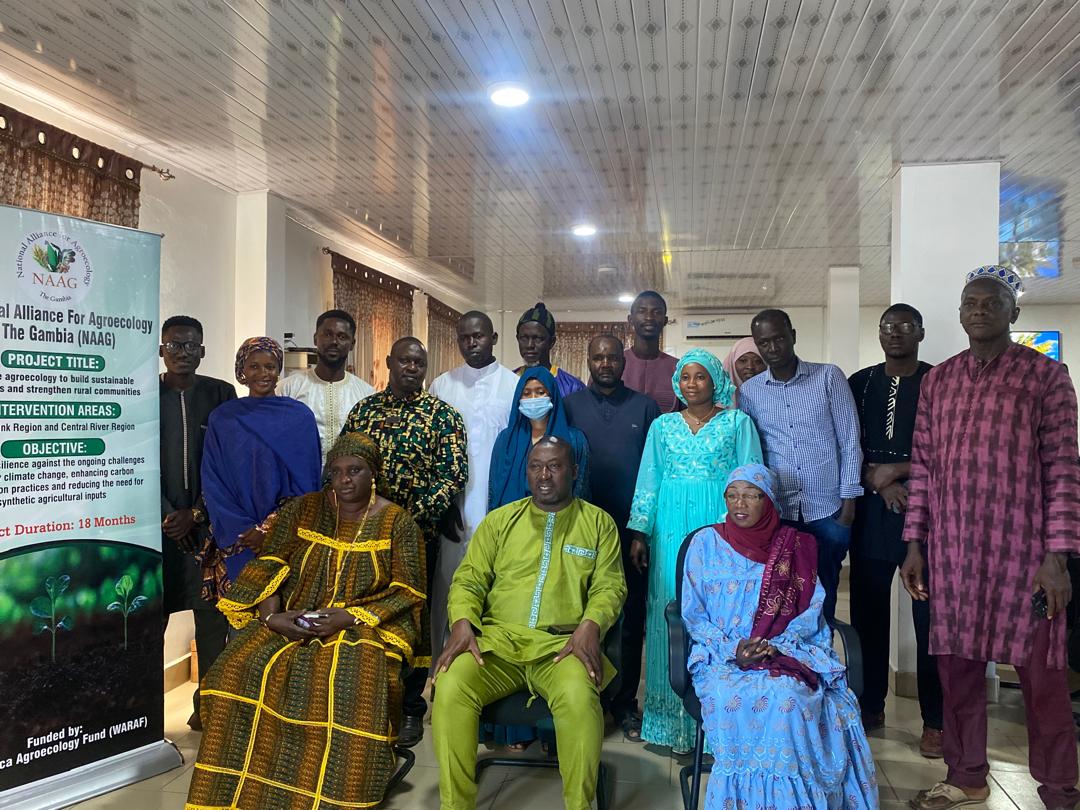
Delivering a detailed opening statement at a stakeholder forum held on Saturday, Sanyang described the gathering as a critical moment for the poultry sector.
“It is with a profound sense of purpose, deep humility and immense gratitude that I stand before these distinguished gatherings to officially open what I believe to be a historic and consequential forum,” he said.
“One that could mark a turning point in the development of the poultry industry in the West Coast region of the Gambia.”
He stressed that although the platform is based in the West Coast Region, its relevance extends across the country.
“And of course the West Coast region of the Gambia is the Gambia at large,” he said.
“There are reasons why we name it the West Coast Region Poultry Farmers Association. And the reason being, now this platform is initiated by GIRAFFE.”
“What was discovered is that the majority, if not all, of the poultry farmers are residents within the West Coast region. So the idea is to start it small at the West Coast region level and then expand to the other regions. But that will not stop other regions from being members.”
Sanyang emphasised the importance of collaboration among stakeholders.
“Your presence today draws from every corner of our poultry value chain and beyond, speaks volumes,” he said.
“It says that we understand as one that the transformation of our sector cannot be achieved in isolation. It demands that we sit together, speak honestly, listen with open hearts and act with collective determination.”
“Today is that day.”
He explained the purpose of the platform and its long-term vision.
“The West Coast Region Poultry Innovation Platform was established with a clear, urgent and well-defined mandate. To systematically strengthen the poultry value chain across the West Coast region of the Gambia and beyond.”
“We exist to improve productivity at the farm level, to enhance coordination across the entire chain from input supply to market, and to drive the kind of market-oriented innovation that will make our sector competitive, resilient and sustainable.”
“We are not politicians, and we are not a government agency.”
“We are not a donor project with an expiry date.”
“We are a stakeholder-owned program, built by the people of this value chain with giraffe for the people of this value chain.”
“Our strength lies in the very diversity that is represented in this room today.”
“Our success will be measured not by reports written, but by the real and tangible improvements in the lives of our poultry farmers, processors, traders and their families.”
Turning to the challenges, Sanyang said the sector is facing serious and interconnected problems.
“Ladies and gentlemen, before we can chart a credible way forward, we must be willing to confront the realities on the ground with honesty and without reservation,” he said.
“The poultry farmers and value chain actors of the Gambia face challenges that are serious, multidimensional and deeply interconnected.”
He pointed first to the rising cost of production.
“Everything is expensive, transport, everything is expensive.”
“We all know that feed constitutes between 60 and 70% of the total cost of poultry products.”
“The price of feed in the Gambia continues to rise at a rate that outpaces what farmers can absorb.”
He warned that dependence on imported inputs is making farmers vulnerable.
“The heavy dependence on imported feed ingredients, for example, maize, soybean meal, vitamins and premixes, means that our farmers are perpetually vulnerable to exchange rate fluctuations and global commodity price shocks.”
He said many farmers have already been pushed out of business.
“Many small-scale farmers who started with great promises have been forced to scale down or shut down entirely.”
“Some people started with big ambitions, great ambitions, but unfortunately, when you go around the country, you observe that most of them are no longer operating.”
“Some of us have even secured funding and started well, but today most of our farms no more existing. They simply cannot afford to feed their birds.”
“This is not a market failure. It is a structural vulnerability that demands a structural response.”
Sanyang also highlighted disease outbreaks and limited veterinary services.
“These are not merely names in a veterinary textbook. They are the nightmares that keep our farmers in the night.”
“A single outbreak can wipe out an entire flock in a matter of days. Erasing months of investment, labour, and hope.”
On finance, he said access remains a major constraint.
“As any poultry farmer in this region, what stands between them and expansion? And the answer is almost always the same, capital.”
“Our farmers cannot access the affordable finance they need to invest in better housing, biosecurity facilities, improved breeds and so on.”
Returning to the issue of markets, Sanyang said the system is failing farmers.
“There is no organised, reliable and well-functioning market system for poultry products in this region, or in the Gambia at large.”
“Prices are dictated by middlemen, rather than determined by transparent market mechanisms.”
“Farmers sell in panic during festive seasons, when supply exceeds demand, and their gains are eroded immediately thereafter.”
He added that the absence of processing and storage facilities is worsening the situation.
“Furthermore, there is almost no value-added processing happening at scale.”
“No significant cold chain infrastructure, no organised processing facilities, no packaging system, meaning that the value that could be added along the chain is lost, and with it jobs and incomes are also lost.”
He also pointed to weak infrastructure at the farm level.
“The majority of our poultry farmers operate in substandard housing conditions.”
“These include structures that compromise bird welfare, expose flocks to extreme heat and humidity, invite predators, and make biosecurity virtually impossible to maintain.”
He said knowledge gaps remain a concern.
“Poultry farming is a science and a business, not merely a tradition.”
“Yet too many of our farmers are operating without access to up-to-date, practical, and locally adapted technical knowledge.”
Despite the challenges, Sanyang said the forum is focused on solutions.
“This forum has been convened not merely to talk about what is wrong, but to collectively architect what must be made right.”
“We are here to prescribe, to comment, and to act.”
“Today must not produce another document that gathers dust. Today must produce a living commitment.”
He called for clear action and accountability.
“Agree on a binding action matrix with defined action points, responsible parties, and realistic timelines for implementation.”
“Today must produce a living commitment, one that we can track, review, and hold each other accountable to.”
He also urged stakeholders to work together.
“We are stronger together than we are apart, but we must build the system and platforms that make that collaboration real and sustained.”
Darboe, speaking from the perspective of farmers on the ground, echoed the urgency of the situation.
“We provided the government with the data, and they were promised by the government that there would be a moratorium on the importation of eggs, but the government has not done that yet,” he said.
Farmers are calling for phased restrictions on imports.
The farmers said the government should do a moratorium for 25% and observe, then increase it to 50% and continue to observe and then impose a total ban on the importation. They believe they can meet national demand. The farmers said that if the government gave them one month to observe them, they could supply the whole country and meet the demand of the people.
Other stakeholders also spoke about the pressures facing the poultry sector, pointing to both market and structural challenges. The President of the National Livestock Owners Association (NALOA), Ebrima Jallow, said while the demand for poultry products in The Gambia remains high, farmers are still struggling to sell what they produce. “When you look at the demand for livestock in this country, especially poultry, it is very high,” he said, but added that “the market is a problem.” He noted that in many cases, farmers are left on their own to find buyers. “Sometimes farmers in Sierra will come and buy from the border area. Because if you have your farm, you cannot sell,” he said. “But they are not very good in marketing… so you have to be the producer, you have to be the seller, you have to do everything within your farm, which is also not easy.”
Jallow said the situation reflects deeper coordination gaps within the sector, where producers lack organised systems to move their goods efficiently. “We need to organise the sector, that’s better. Those who are doing the production, do the production then also, it should be a responsibility of others to collect it from you, quickly sell it, and then you get back your money,” he said. He also questioned the continued reliance on imports while local farmers are unable to sell. “The Gambian people are hungry every day, importing a lot of chickens into this country while our Gambian farmers are producing, and still we cannot sell?”
Dr Isatou Savage, Director of Livestock at the West Coast Region, acknowledged that the poultry sector has expanded in recent years, particularly in the West Coast Region, but said challenges persist despite this growth. “West Coast region is the main hub for poultry production,” she said, noting that “over the past few years, we have seen a massive increase in the number of poultry farms.” She added that while initiatives like GIRAFFE have supported farmers, sustainability remains key. “The responsibility is on the beneficiaries now; you have to make sure that you sustain it in such a way that the entire population will benefit directly or indirectly,” she said.
Dr Savage also pointed to high feed costs and broader production challenges affecting farmers. “We know that there are challenges… such as high cost of feed,” she said, explaining that the rising cost of inputs continues to affect profitability. She encouraged farmers to work closely with extension services and adopt better practices. “Even if you see one chick that is affected, you have to consult your extension worker,” she said, stressing that “prevention is better than cure.”
Discussion