
By Yankuba Jallow
The Minister of Works and Infrastructure, Ebrima Sillah, and the National President of the National People’s Party (NPP), Honourable Musa Drammeh, have rejected the United Democratic Party’s (UDP) plan to announce results from the December 2026 presidential election before the Independent Electoral Commission (IEC) makes its official declaration.
The two senior figures in the governing party have separately responded to comments by Dr Lamin Manneh, an executive member of the UDP, who said his party plans to collect results from polling stations, enter them into its own system and make the figures public before the IEC announces the final results.
Sillah said the country’s electoral system allows votes to be counted at polling stations and for party agents and others to know the outcome at those stations, but insisted that the law gives the IEC the responsibility to compile the results and declare the final outcome of an election.
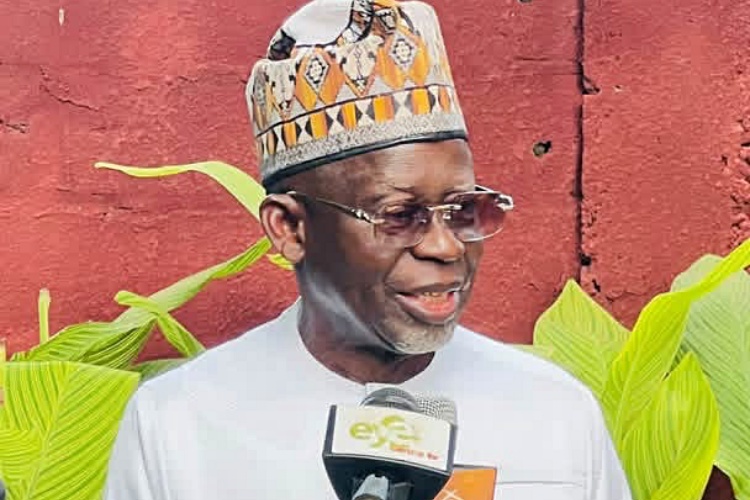
Drammeh, who is also Minister for Fisheries, repeated the same position, saying it would be unusual for a political party to assume the role of announcing election results.
“It is unusual for any political party to announce the results. You won’t hear it anywhere in the world. It won’t happen here in The Gambia,” Drammeh said.
His comments add to the growing political debate over the UDP’s announced plan to operate its own results-gathering system during the presidential election.
The disagreement has brought renewed attention to the distinction between results counted and displayed at polling stations and the legal authority to declare the final result and the candidate elected.
Under Section 43(1) of the 1997 Constitution, the IEC is responsible for the conduct and supervision of public elections and referendums.
The Elections Act also provides the process through which votes counted at polling stations are reported, compiled and officially declared.
Section 80 of the Elections Act provides for the preparation of a report after votes have been counted at a polling station. The report contains the votes obtained by each candidate.
Section 80(4) requires a signed copy of the results to be displayed at the polling centre for public attention.
The results are then transmitted through the electoral process to the Commission.
Section 81(1) provides that the Returning Officer shall report the results to the Commission.
Section 81(2) states that the Commission shall compile the results and declare the final result and the candidate elected.
It is this legal responsibility that Sillah placed at the centre of his response to Manneh and the UDP.
The Works Minister said he had seen a Foroyaa Newspaper report revealing the UDP’s plan to announce its own results before the IEC.
He said political parties should respect the legal process governing elections.
“Despite the people knowing the results by virtue of counting-on-the-spot, the law provides that the IEC is mandated to announce the results, including the final results,” Sillah said.
“If Lamin Manneh wants to respect the law, people should tell him to abide by the law.”
Sillah’s response was also strongly political, as he questioned Manneh’s involvement in the struggle against former President Yahya Jammeh.
The Minister, who was formerly a member of the UDP before joining President Adama Barrow’s political camp, described Manneh as a “Peace Time Hero”.
“When the people were fighting to bring democracy to this country, Lamin Manneh was working at the African Development Bank. He was silent, and no one heard from him. People do not know any contributions he made to the country or the party of UDP where I used to belong to,” the Minister said.
Sillah said Manneh only joined politics after retiring from his professional career.
“When Manneh was silent, we were here and fighting dictatorship. Manneh and his likes were not involved,” he said.
Drammeh made a similar criticism, saying Manneh spent his professional career at the African Development Bank before returning to participate in politics after retirement.
The NPP National President accused Manneh of anticipating defeat ahead of the presidential election and said this was behind his public statements about the UDP’s plans for announcing results.
According to Drammeh, Manneh is “preempting” what he described as the UDP’s defeat.
The Fisheries Minister said this was why, in his view, Manneh was making claims about the party announcing election results ahead of the IEC’s official declaration.
Drammeh said the UDP executive had spent his career at the African Development Bank and only returned to participate in politics after retiring.
“It is unusual for any political party to announce the results. You won’t hear it anywhere in the world. It won’t happen here in The Gambia,” Drammeh said.
The NPP leader’s intervention means that two senior figures from the governing camp have now publicly challenged the UDP’s proposed approach.
The controversy began after Manneh said the UDP would collect election results directly from polling stations and process them through the party’s own system.
“You see this 2026 presidential elections coming, we [UDP] will do the same. We will provide the people with the results before 9 pm, or possibly before 8 am,” Manneh said.
Manneh based the UDP’s position on the country’s “counting-on-the-spot” system.
“The day we agreed to use the ‘Spot Counting’ law as a country was the day everyone has the right to announce elections results,” Manneh said.
“What IEC does is to proclaim, but everyone has the right to announce the results,” he added.
According to Manneh, the UDP’s figures would be based on results collected directly from polling stations by party agents.
“We collect and put it our system; then announce for everyone to know,” he said.
Manneh said the UDP had used similar systems during previous elections and claimed that the figures collected by the party had matched those later announced by the IEC.
Referring to the by-election in Masembeh in Kiang Central, he said: “When we gave our results, it was exactly the same as the one IEC gave. There was no difference of one vote.”
He said the same happened during the Kiang Kaiaf by-election, although the UDP lost that contest.
“We lost and we acknowledge that. The results we gave were exactly the same as the ones the IEC announced,” he said.
Sillah, however, said knowing results after counting at polling stations was different from making the official declaration of the final result.
He said the country’s electoral process already provides for votes to be counted at the polling stations, allowing party agents and other stakeholders to know the figures recorded there.
But he maintained that the law gives the IEC the mandate to announce the final result.
“Despite the people knowing the results by virtue of counting-on-the-spot, the law provides that the IEC is mandated to announce the results, including the final results,” Sillah said.
“If Lamin Manneh wants to respect the law, people should tell him to abide by the law.”
Sillah also recalled the events surrounding the 2016 presidential election, when former President Yahya Jammeh was defeated after more than two decades in power.
He said that when the UDP opened applications for a presidential flagbearer, the party reached out to people, but none of them decided to come forward to challenge Jammeh.
According to Sillah, Manneh was aware of the process but was not prepared to put himself forward.
The Minister said the period was particularly difficult because senior UDP leaders were incarcerated at Mile 2 Central Prison.
“President Barrow decided to take the risk and challenge Jammeh in the elections. As a matter of fact, when Barrow was selected by the UDP as the candidate, the people were afraid to join him for the nationwide tour,” he said.
Sillah accused Manneh of attempting to become a political hero after the struggle had already been fought.
“When the people were fighting to bring democracy to this country, Lamin Manneh was working at the African Development Bank. He was silent, and no one heard from him. People do not know any contributions he made to the country or the party of UDP where I used to belong to,” he said.
“When Manneh was silent, we were here and fighting dictatorship. Manneh and his likes were not involved,” Sillah added.
The Works Minister also warned Manneh against what he described as statements promoting violence in media interviews.
Sillah said Manneh should stop making such statements and allow the IEC to perform its functions as the institution mandated by law to conduct elections and announce the results.
Drammeh also maintained that the responsibility for the official declaration of results does not belong to political parties.
“It is unusual for any political party to announce the results. You won’t hear it anywhere in the world. It won’t happen here in The Gambia,” Drammeh said.
The dispute comes against the background of the UDP’s experience following the 2021 presidential election.
The UDP, led by Ousainou Darboe, challenged the results of the December 2021 presidential election after President Adama Barrow was declared the winner by the IEC.
The party subsequently filed an election petition at the Supreme Court.
The petition was later dismissed after the UDP failed to comply with procedural requirements under Rule 11 of the Elections Petition Rules.
The case was not determined on the substantive allegations raised by the party.
Darboe maintained at the time that the UDP had not lost its case on the merits.
“We have not lost anything because the petition was not dismissed based on merit but a mere technicality,” Darboe said.
The party is now preparing for the December 2026 presidential election, with Manneh saying the UDP will once again rely on its own system to gather results from polling stations.
The proposed system has placed the difference between publishing figures gathered by political parties and making the formal declaration of the final result at the centre of the political debate.
Manneh has maintained that the UDP will announce the figures collected through its own system.
“We collect and put it our system; then announce for everyone to know,” he said.
But both Sillah and Drammeh have rejected the approach.
For Sillah, the country’s electoral laws are clear that while results may be counted and known at polling stations, the responsibility for declaring the final result remains with the IEC.
“Despite the people knowing the results by virtue of counting-on-the-spot, the law provides that the IEC is mandated to announce the results, including the final results,” Sillah said.
“If Lamin Manneh wants to respect the law, people should tell him to abide by the law.”
Drammeh, speaking as the National President of the governing NPP, said the UDP should not expect a political party to take over the responsibility of announcing election results.
“It is unusual for any political party to announce the results. You won’t hear it anywhere in the world. It won’t happen here in The Gambia,” he said.
As preparations continue for the December 2026 presidential election, the UDP has maintained that it intends to collect results from polling stations and release its figures to the public before the IEC’s official declaration.
Manneh has said the party’s system will allow it to gather and process the results quickly.
“You see this 2026 presidential elections coming, we [UDP] will do the same,” he said.
“We will provide the people with the results before 9 pm, or possibly before 8 am.”
But Sillah has insisted that political parties must not confuse the public knowledge of polling-station results with the legal authority to declare the final outcome.
“Despite the people knowing the results by virtue of counting-on-the-spot, the law provides that the IEC is mandated to announce the results, including the final results,” he said.
And Drammeh has gone further, saying the UDP’s proposed action would not happen in The Gambia.
“It is unusual for any political party to announce the results. You won’t hear it anywhere in the world. It won’t happen here in The Gambia,” Drammeh said.

Discussion