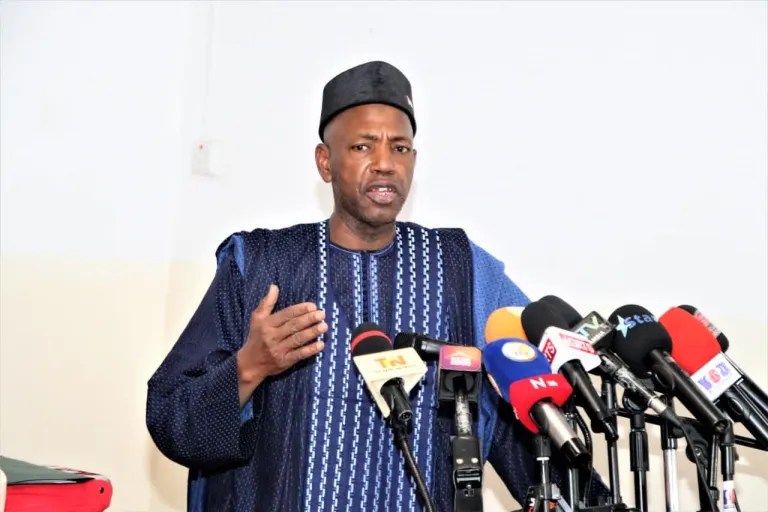
National Assembly Member for Banjul Central, Hon. Abdoulie Njai, has described citizens’ demands for electricity and accountability as legitimate, while urging them to express their frustrations through peaceful protests.
Speaking during the Matter of the Day debate at the Third and Fourth Ordinary Sessions of the 2026 Legislative Year, Njai also raised concerns over the country’s longstanding electricity challenges, saying the problem has persisted for nearly five decades despite successive reforms, investments and interventions.
“Since 1977, from UEC to NAWEC, we have witnessed reforms, restructuring, investments and successive interventions aimed at resolving our electricity challenges. Successive governments have made efforts, resources have been committed, and plans have been developed, yet nearly five decades later, the crisis remains with us,” he said.
Njai questioned why decades of interventions had failed to deliver a reliable and sustainable electricity system for Gambians.
“Thousands of our fellow citizens have taken to the streets. In some communities, blackouts have reportedly lasted up to 30 hours, while NAWEC itself has acknowledged the deficit in power supply. The situation is serious, and our people’s frustrations are understandable,” he said.
The Banjul Central lawmaker acknowledged measures taken by President Adama Barrow’s government in response to public concerns, including the establishment of a task force and visits to NAWEC facilities.
However, he described these measures as a beginning rather than a long-term solution to a problem that has persisted for decades.
Njai said the impact of prolonged electricity outages extends beyond power supply, affecting households, healthcare, education, businesses and livelihoods.
“Behind every statistic is a human being. Behind every hour of darkness is a family struggling to cope. Food is spoiling, children are unable to study properly, patients and vulnerable groups face hardship, while small businesses are losing income and livelihoods are disrupted,” he said.
He called for a comprehensive approach to addressing the crisis, including strengthening electricity generation capacity, modernising and expanding transmission and distribution networks, reducing technical and commercial losses, improving operational efficiency and strengthening NAWEC’s financial sustainability.
Njai also called for a review of NAWEC’s human-resource structure and greater accountability within the company.
“We need the right people with the right skills in the right positions where there is persistent deficiency, duplication or underperformance. We must be prepared to rationalise the workforce and, where necessary, be prepared to lay off personnel in accordance with the law and due process,” he said.
He further called for a long-term national electricity strategy covering the next 10, 20 and 30 years, arguing that electricity demand would continue to increase as the population and economy grow.
Njai urged the government to strengthen institutional reforms, management and accountability systems, explore public-private partnerships where appropriate and make greater use of the country’s renewable energy potential, particularly solar energy.
On the recent protests over electricity, Njai said citizens have a right to demand better services and accountability but urged them to avoid violence and vandalism.
“We hear their frustrations in our communities, homes and from the people we represent. We must speak honestly about our shared responsibilities, preserve peace and protect public property,” he said.
He expressed concern over reports of vandalism and destruction of public property in areas including Latrikunda Sabiji and Farato.
“Destruction will not produce electricity. Violence has never brought a lasting solution to any problem. Vandalising public property will only make an already difficult situation far worse, and ultimately the cost will be borne by the very people whom we seek to protect,” Njai said.
He appealed to Gambians to exercise restraint, stressing that their frustration, demand for electricity and demand for accountability are legitimate, but should not be used to justify lawlessness, destruction or violence.
“Let us protest peacefully, let us demand accountability peacefully, let us hold government to account through the institutions of our democracy, and let government in turn listen to the people and respond with the urgency the crisis demands,” he said.
Njai concluded by stressing that electricity is essential to healthcare, education, food preservation, businesses, employment, productivity and economic growth, as well as the quality of life of Gambians.


Discussion