
By Ndey Sowe
The Gambia’s National Nutrition Agency (NaNA) has called for more parent-friendly workplaces to enable mothers to continue breastfeeding while pursuing their careers.
The call was made during a day-long meeting bringing together public and private sector stakeholders in Banjul to discuss policies and regulations aimed at promoting, protecting and supporting breastfeeding.
The meeting, organised by NaNA with support from UNICEF, was part of activities marking World Breastfeeding Week 2026.
The global campaign, observed from 1 to 7 August, is being held under the theme “Breastfeeding: for a Sustainable Start in Life. Strengthen what works”.
In The Gambia, NaNA says it has extended activities beyond the official week and is continuing its advocacy into September.
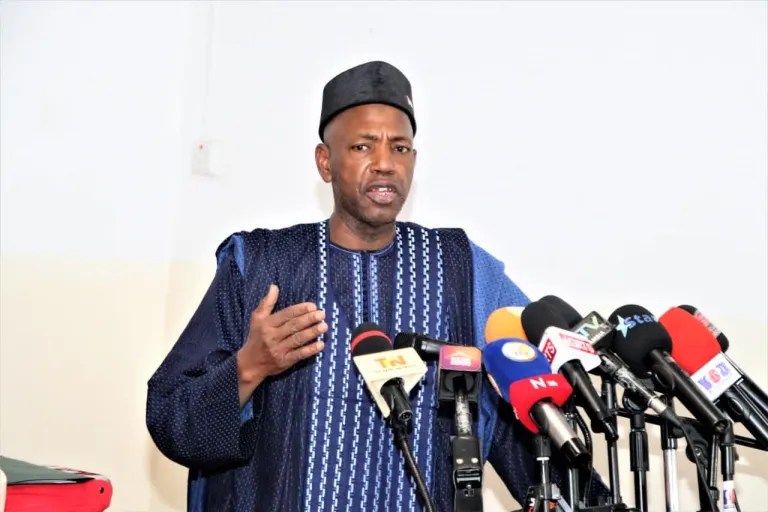
Director of Social and Behavioral Change Communication( SBCC) Abdou Aziz Cessay told participants that breastfeeding should not be treated solely as a health issue, arguing that businesses, government institutions and other sectors all have a role to play.
The agency is advocating for workplaces that allow mothers to remain close to their children and breastfeed when needed.
Mr. Cessay said such support should extend beyond conventional offices to include workplaces such as farms, gardens and other locations where women earn a living.
“We want to create parent-friendly workplaces so that those kids will have the best from their mothers,” he said.
He also urged private-sector organisations and other stakeholders to become “agents of change” by ensuring that discussions about breastfeeding translate into practical measures.
NaNA said its approach is based on the idea that nutrition should be integrated into policies and strategies across different sectors, rather than being left to the health and nutrition authorities alone.
Fatou A. Darboe, program Coordinator Nutrition and School Health at the Ministry of Health said the ministry backs workplace support breastfeeding was among the most effective investments in the health and development of children, mothers and communities.
She said breastfeeding provides essential nutrition, strengthens immunity, supports healthy growth and development, and can help reduce childhood illness and deaths.
But she stressed that promoting breastfeeding required cooperation beyond the health sector.
“Supporting breastfeeding is not only a health responsibility,” she said, pointing to the role of families, communities, employers, policymakers and the private sector.
The ministry welcomed the dialogue and said it was committed to working with NaNA, UNICEF and other partners to create an environment in which mothers could breastfeed safely and successfully.
Participants were encouraged to identify practical solutions, strengthen existing workplace support and develop concrete measures to help women balance breastfeeding with professional responsibilities.
NaNA also highlighted the establishment of breastfeeding- and parent-friendly facilities as an important part of the country’s efforts, citing the Serrekunda Cancer Hospital as an example of progress.
Why workplace support matters
The issue is particularly important because exclusive breastfeeding is recommended during the first six months of a child’s life.
The World Health Organization (WHO) and UNICEF recommend that babies begin breastfeeding within one hour of birth and receive only breast milk for their first six months. After six months, children should receive safe and nutritionally adequate complementary foods while breastfeeding continues until two years of age or beyond.
WHO said breast milk provides all the nutrients an infant needs during the first six months and helps protect children against illnesses including diarrhoea and pneumonia.
This means mothers returning to work can face a practical challenge if their workplaces do not provide adequate time, space or other support for breastfeeding.
Globally, fewer than half of infants under six months are exclusively breastfed, according to WHO. The organisation says governments should strengthen evidence-based support for breastfeeding, including counselling for families and implementation of measures that make breastfeeding easier.
Bakary D. Dampha, Nutrition Officer from UNICEF said The Gambia had a history of promoting and protecting breastfeeding and should now build on measures that have already shown results.
He described the country as a model in breastfeeding promotion and noted its efforts to take the Baby-Friendly Hospital Initiative beyond health facilities and into communities.
The UNICEF representative said the focus should now move from recognising what works to expanding and strengthening those interventions.
He also described breastfeeding as a child-rights issue, saying children should not be deprived of its benefits.
UNICEF reaffirmed its support for the Gambian government, NaNA and other partners in efforts to ensure mothers receive the support needed to breastfeed.
Beyond annual awareness campaigns
The discussions also raised a broader question about how breastfeeding support can be sustained beyond World Breastfeeding Week.
Malang N. Fofana, Director General NaNA said its decision to continue activities into September reflects the importance it places on breastfeeding and nutrition.
Mr. Fofana stressed that resources and partnerships would be necessary to turn existing policies into practical support for mothers.
The meeting brought together representatives from government ministries, public institutions, the private sector and development partners.
For The Gambia, the challenge is now to ensure that commitments made during breastfeeding campaigns are translated into lasting workplace policies and facilities that allow mothers to combine employment with breastfeeding.
With WHO recommending exclusive breastfeeding for the first six months and continued breastfeeding alongside complementary foods for two years or longer, the debate over workplace support is likely to remain an important part of maternal and child health policy.


Discussion