By: Aja Beyai
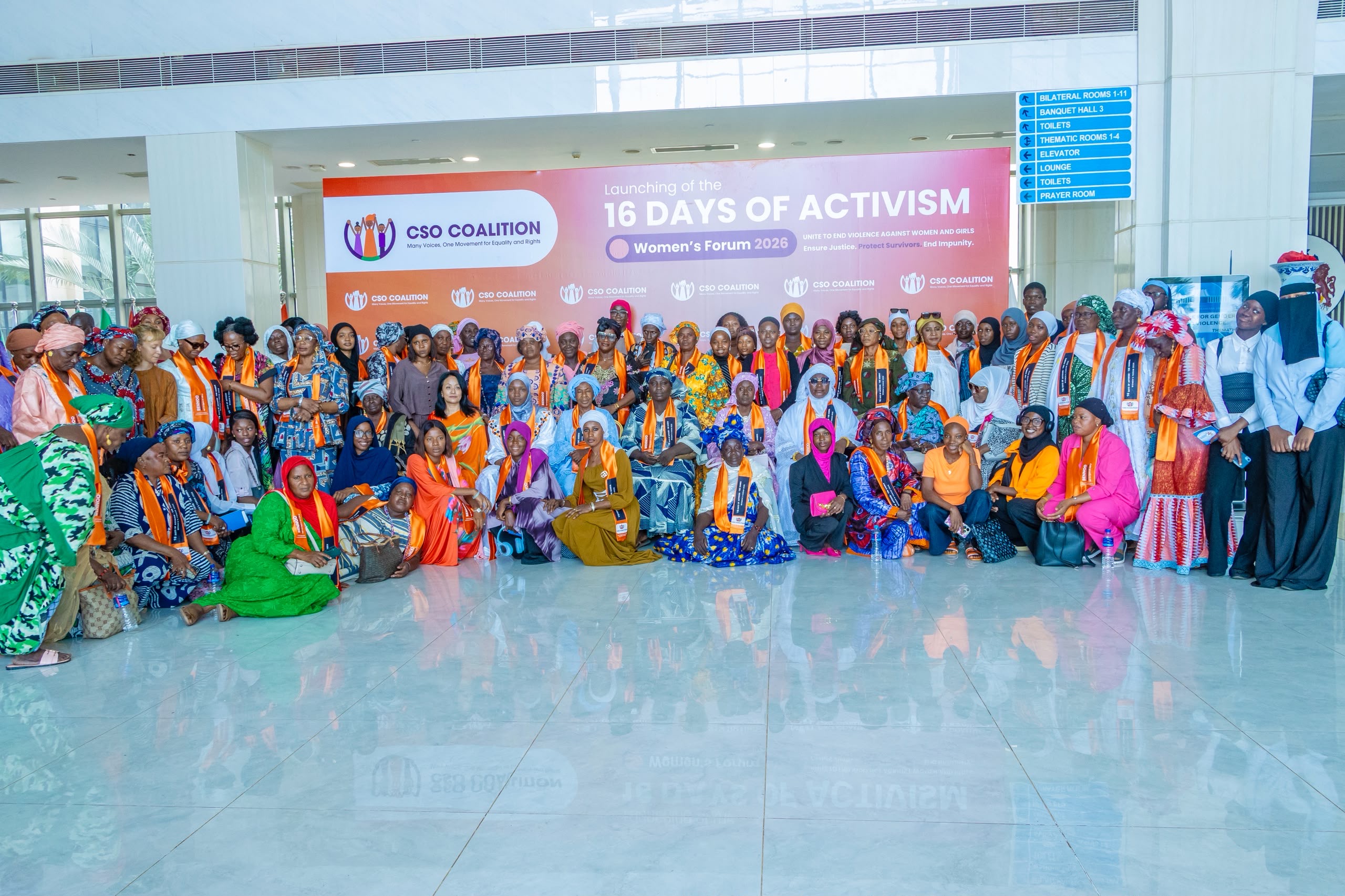
Women from across The Gambia gathered on Wednesday at the Sir Dawda Kairaba Jawara International Conference Center for a Women’s Forum to launch the 16 Days of Activism Against Gender-Based Violence and mark the International Day for the Elimination of Violence Against Women, with women resolving to demand that candidates protect the FGM ban and women’s rights by maintaining and fully enforcing the Women’s Amendment Act 2015; fund survivors and deliver justice by increasing funding for the relevant victims’ funds, expanding services, and operationalizing the GBV Special Court; and deliver women’s representation of at least 30 percent in the National Assembly, Cabinet, and senior public appointments, with concrete measures to increase women’s political leadership.
The forum then reviewed and adopted the key commitments, which Ndegen Jobe read out and will present to political leaders. The commitments restate the country’s legal gains—the Women’s Amendment Act 2015, the Sexual Offenses Act 2013, and the prohibition of FGM—but note that women still face GBV, harmful traditional practices, economic inequality, child marriage, and limited participation in decision-making.
The gathering, convened by the CSO Coalition and the Women’s Forum, brought together women leaders, civil society organizations, development partners, the media and political party representatives days before Gambians elect a new president.
Hosting the event, Annette Camara, the President of the Women Journalists Association of The Gambia (WoJA), said the discussion went to the heart of democracy, governance and national development. “Women constitute a significant part of our population. They contribute to our economy, sustain families, lead communities, participate in civil society, educate our children and play an important role in shaping our society,” she told participants. “Yet the discussion about national priorities, public resources and political leadership is made difficult sometimes for women. Representation and influence remain an area requiring urgent attention.”
Camara stressed that the forum was not merely celebratory. “As the country approaches another presidential election, this is an opportunity to ask: What place will women occupy in the vision, the policies and governance priorities of the next government? For the first time, we will see a woman on the ballot. What will be the outcome?” she asked. “We want to move beyond the general statement of supporting women. We want to hear clear commitments, practical actions and timelines with accountabilities.”
Delivering the opening remarks, Yadi Njie Eribo, Chairperson of the CSO Coalition, said the engagement came at a critical moment as The Gambia joined the global 16 Days of Activism under the theme “Ensure Justice, Protect Survivors, End Impunity.” “Ending violence against women and girls requires more than an expression of solidarity. It requires concrete commitment, effective laws, adequate resources, accessible justice, and political leadership that prioritizes the protection and empowerment of women and girls,” she said.
Eribo presented three priority demands to the eight presidential candidates. First, protect the FGM ban and women’s rights by maintaining and fully enforcing the Women’s Amendment Act 2015, which prohibits Female Genital Mutilation, and by strengthening implementation of all laws protecting women from gender-based violence. “The protection of women and girls must never be compromised,” she declared. Second, fund survivors and deliver justice by increasing and sustaining funding for the Domestic Violence Victims Fund and the Trafficking in Persons Victims Fund, expanding survivor centre services, strengthening referral and protection mechanisms, and making the GBV Special Court fully functional and accessible.
“Survivors must be supported, perpetrators must be held accountable, and impunity must not be allowed to prevail. Third, deliver women’s representation by committing to at least 30 percent representation of women in the National Assembly, Cabinet and senior public appointments through deliberate policies and practical measures. “Remember, only women can speak up for women.”
Eribo emphasized that the CSO Coalition is not promoting any party or candidate but seeks specific, measurable and publicly declared commitments that citizens can follow up.
In the keynote address, Fatou Baldeh, founder and Executive Director of WILL Gambia, saluted the women present and framed violence against women and girls as a national, development and human rights issue. Citing global figures, she noted that nearly one in three women will experience physical or sexual violence in her lifetime, and every 10 minutes a woman or girl is killed by an intimate partner or family member. In The Gambia, the 2019-2020 Demographic and Health Survey found that 27 percent of women aged 15-49 have experienced physical violence since age 15, 7 percent have experienced sexual violence, and 73 percent have undergone FGM.
Baldeh warned that threats to reverse the FGM ban are deeply concerning. “We demonstrated leadership at the International Court of Justice, where The Gambia stood up for the rights of the Rohingya Muslims. But if we are to be credible defenders of human rights internationally, we must be equally committed to upholding those principles at home. We cannot celebrate human rights abroad while weakening protection for women and girls at home,” she said.
She highlighted that women now represent 56 percent of all registered voters—644,000 voters—the country’s largest voting bloc. “So we have shown up. The question now is where those seeking leadership will show up for women. Participating must mean more than casting a ballot every five years. It must translate into political influence, protection of rights, access to justice, and meaningful representation.”



Discussion