
Every democracy should encourage citizens to seek public office. But when presidential ambitions outpace constitutional readiness, the nomination process risks becoming a theatre of self-promotion rather than a serious examination of leadership. The central problem is not ambition itself, but the growing habit of treating nomination as performance instead of preparedness.
The Constitution does not require a convoy, a rented luxury vehicle, or a social media following to qualify for the presidency. It requires preparation, competence, and compliance with the law. Yet each election cycle, The Gambia sees “Sosalaaso parties and Tefyengal political movements” emerge, often more skilled at generating headlines than meeting the basic requirements of statecraft.
The latest presidential aspirant nomination controversies reveal an uncomfortable truth about Gambian politics: too many aspirants invest in appearances before qualifications, motorcades before manifestos, and publicity before preparedness. This is the central flaw the country must confront. Democracy deserves competition, but it also demands competence.
The Gambia’s democracy is one of its proudest achievements. Our Constitution gives every qualified citizen the right to seek public office, including the presidency. We must protect and respect that right. But rights also come with responsibilities.

The presidency is not an internship. It is not a social media project. It is not a vehicle for personal validation. Nor should the nomination process be treated as a public relations exercise designed to generate attention before an inevitable withdrawal.
The events surrounding the nomination of Gambia Labor Party leader Bakusa Dukureh have once again raised legitimate questions about political preparedness in modern Gambian politics.
According to reports from the Independent Electoral Commission (IEC), Dukureh disclosed that he holds citizenship of both The Gambia and the United States, triggering concerns under Section 62(2) of the Constitution, which provides that a person holding the citizenship or nationality of another country is not qualified for election as President.
Whatever the IEC’s ultimate determination, the larger issue is hard to ignore. How does a presidential aspirant reach nomination day without first resolving such a fundamental constitutional question?
Seeking to become President is not a spontaneous decision. It requires planning, legal preparation, administrative competence, and a thorough understanding of constitutional requirements.

If an aspiring president is uncertain about satisfying one of the most basic eligibility conditions, citizens are entitled to ask how that individual intends to navigate the far more complex challenges of governing a nation. This criticism is not directed at one man alone; it speaks to a wider pattern of unreadiness.
The problem is becoming increasingly familiar. Every election cycle produces a collection of political parties, political movements, and aspiring candidates who emerge with considerable publicity but limited preparation.
Some assemble convoys before constructing manifestos. Some gather supporters before building institutions. Others appear to discover constitutional requirements only after collecting nomination papers.
The bigger puzzle is that in a country with no shortage of lawyers, legal experts, and constitutional practitioners, some presidential aspirants still arrive on nomination day apparently unsure whether they meet basic eligibility requirements. One would expect any serious presidential hopeful to have assembled a competent legal and administrative team long before appearing before the IEC. A lawyer can review constitutional qualifications.
Hiring a lawyer or paralegal, or having a trained administrative team member use a checklist, can identify missing documents.An adviser can flag potential eligibility issues months in advance. These are not extraordinary measures. They are the minimum standards of preparation for anyone seeking the nation’s highest office. Yet too often, some aspiring politicians devote more energy to cultivating the appearance of a campaign than to preparing for the reality of one.

The modern political marketplace has unfortunately created a new temptation: politics as personal branding. A convoy becomes a substitute for organization. Social media visibility becomes a substitute for policy. A luxury vehicle becomes a substitute for political credibility. For some, the objective seems less about winning an election than about projecting the image of someone who might one day win one.
The result is a peculiar form of political theatre. A candidate may arrive at the IEC escorted by an impressive motorcade, surrounded by supporters, cameras, and slogans, only to discover that a constitutional requirement has not been satisfied, a document has not been obtained, or a legal question remains unresolved.
One also cannot ignore the broader public conversation about the growing obsession with political optics. Public reports and court disputes in recent years have highlighted controversies surrounding campaign-related rentals and unpaid obligations linked to political self-promotion. The courts and the parties involved should address the details of such matters.
What concerns the public is the underlying culture: an increasing tendency to invest in the appearance of leadership before demonstrating the leadership capacity. That should concern all of us because governing a republic requires far more than assembling a convoy.
Indeed, a mature democracy should encourage citizens to ask a simple question: if a candidate cannot organise a nomination, how will that candidate organise a government? The presidency is not a branding exercise. It is the country’s most demanding administrative office.
Just as a convoy is not a campaign, a luxury vehicle is not a manifesto, a crowd is not a constituency, and collecting nomination papers is not proof of preparedness.
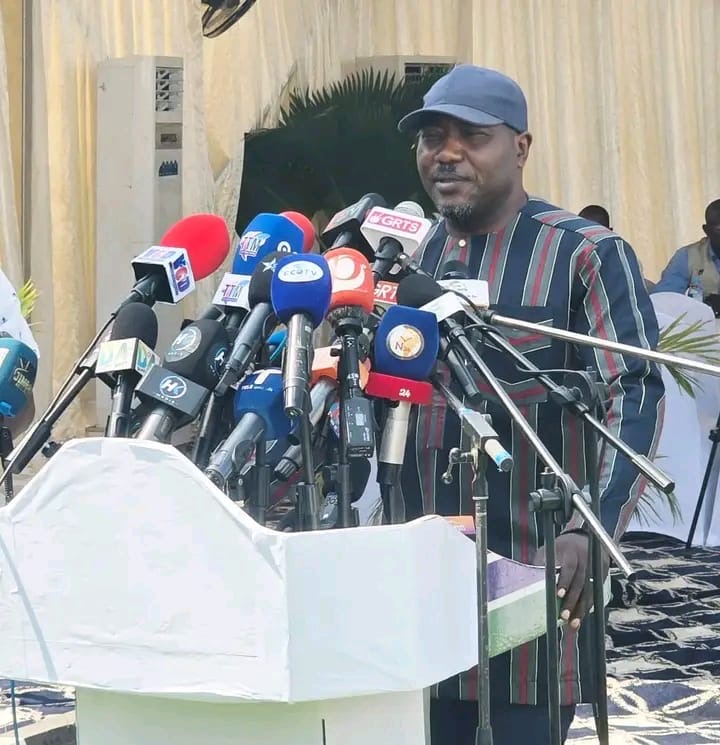
The IEC nomination process is not merely an administrative formality. It is a test of seriousness. The documents required are not hidden. The rules are not secret. The constitutional provisions are not new. Any candidate seeking the presidency should have assembled every required document, settled every legal question, and verified every constitutional qualification long before arriving at the IEC.
That is what preparedness looks like. A healthy democracy welcomes competition. A mature democracy expects competence. And there is an important difference between the two. Too many aspirants prepare for the motorcade to the IEC, and too few prepare for the responsibilities of State House.
A rented convoy can create the image of momentum. A luxury vehicle can create the illusion of political strength. A crowd can create the appearance of popularity. But none of these can substitute for constitutional eligibility, administrative competence, legal preparedness, or a coherent national vision. Photographs do not govern democracies. They are governed by preparation.

The tragedy of our politics is that some aspirants spend months preparing for the motorcade and only days preparing for the presidency. Democracy gives every Gambian the right to run for President. It does not give anyone the right to arrive unprepared.
The Presidency is too important an office for ‘I didn’t know,’ ‘I forgot,’ or ‘I will sort it out later.’ Those excuses belong in everyday life, not on the doorstep of State House. A nomination is not a publicity tour. It is an examination. Citizens have every right to expect those seeking the nation’s highest office to show up having done their homework.
By Alagi Yorro Jallow


Discussion