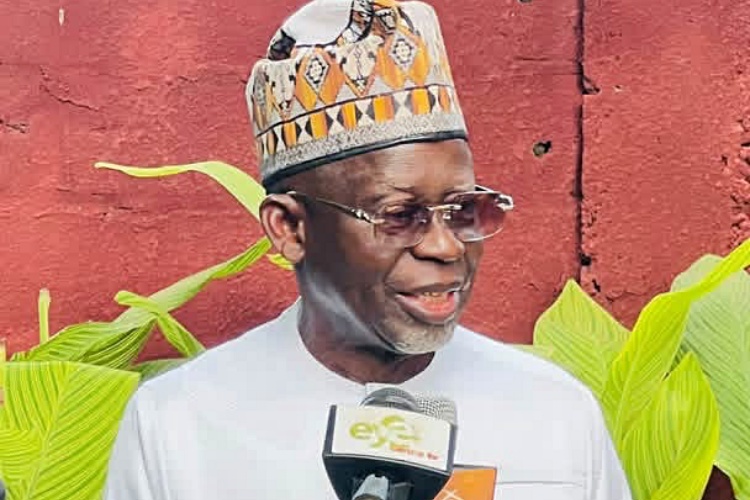
Kanifing Municipal Council (KMC) Mayor and Coalition CMC 2026 presidential candidate Talib Ahmed Bensouda has unveiled an economic plan aimed at transforming The Gambia into a middle-income country by increasing the country’s Gross Domestic Product (GDP) from about $3 billion to $15 billion.
Speaking on Coffee Time with Peter Gomez, Bensouda criticised the government’s current tax policy, arguing that the administration is placing excessive pressure on the existing formal sector while failing to adequately integrate the country’s large informal economy into the tax system.
Bensouda said his economic vision would seek to increase the country’s GDP to $15 billion while significantly raising GDP per capita from approximately $1,000 to $15,000. He argued that the government should focus on creating an environment that encourages businesses to grow, rather than relying heavily on increased taxation of a relatively small formal sector.
According to Bensouda, a significant portion of the country’s potential tax revenue remains untapped because of the size of the informal economy and the lack of systems to bring informal businesses into the formal sector. He estimated that as much as 90 percent of potential taxes go uncollected, arguing that the government should develop deliberate strategies to formalize informal businesses and expand the tax base.
“The government is squeezing the formal sector while the informal sector remains largely untapped,” Bensouda said, stressing the need for lower and more sustainable tax rates alongside policies that encourage businesses to transition into the formal economy.
The KMC Mayor also criticised what he described as inadequate investment in the foundational systems needed to support economic development. He said local councils had, in some instances, been forced to abandon functioning frameworks without sufficient justification.
Bensouda identified the absence of a reliable national addressing system as one of the major structural challenges facing the country. “A core bottleneck for The Gambia is the total absence of a reliable addressing system, which cripples both taxation and financial inclusion,” he said.
He explained that without reliable physical addresses, financial institutions face difficulties in verifying assets and extending credit, while government agencies struggle to effectively track property ownership and expand the tax base.
According to Bensouda, establishing such basic systems may not always be politically attractive because they require long-term investment, but he argued that they are essential for sustainable economic transformation.
He said The Gambia’s economic strategy should therefore focus on expanding the formal economy, improving digital and financial inclusion, strengthening local government systems and creating incentives for businesses to grow.
Bensouda’s proposed $15 billion GDP target represents an ambitious economic vision, with its success likely to depend on the government’s ability to broaden the tax base, formalise informal businesses and invest in the institutional and digital infrastructure required to support long-term growth.


Discussion