
Human rights defenders, survivors, and advocates from across Africa have gathered in Banjul for the 87th Ordinary Session of the African Commission on Human and Peoples’ Rights (ACHPR). As Africa’s primary human rights body, the Commission meets to review the human rights situation across the continent, evaluate country reports, and hold state parties accountable to their commitments under the African Charter.
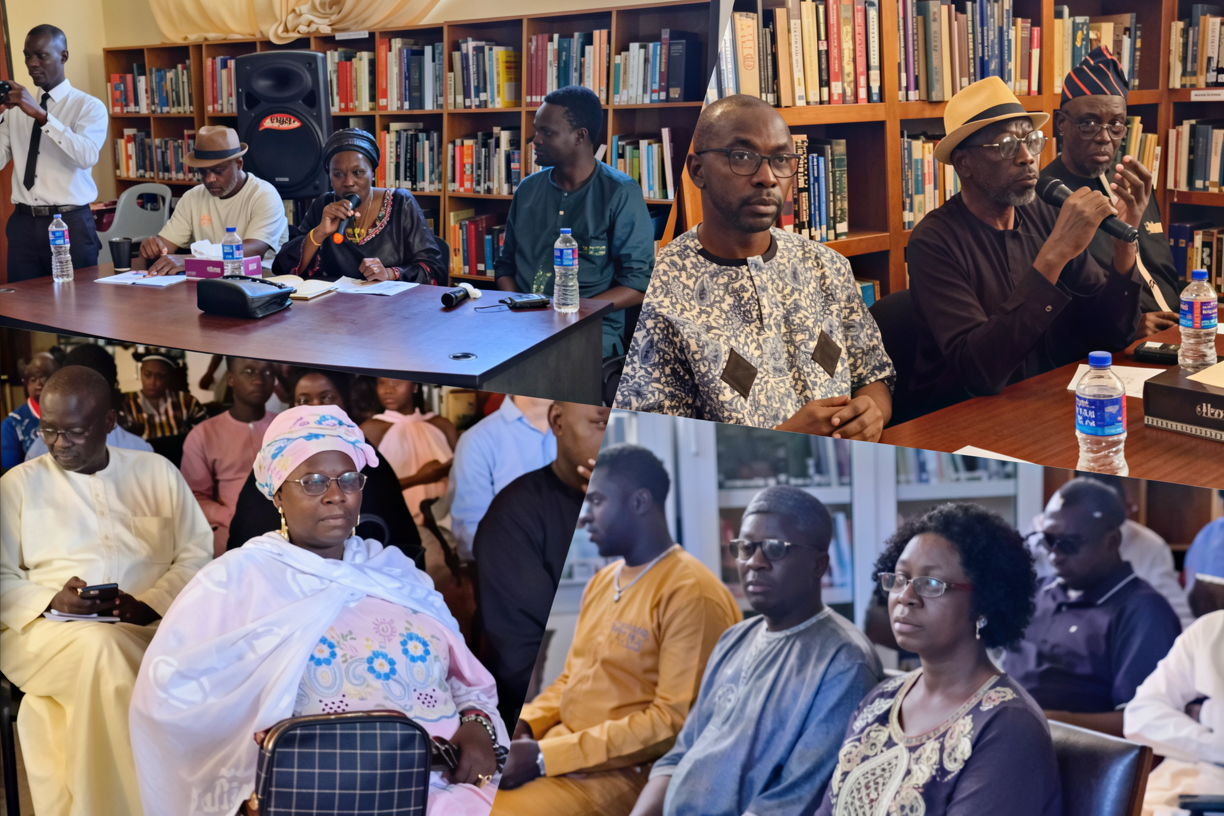
Against this backdrop, a side event organized by Equality Now in partnership with the Solidarity for African Women’s Rights (SOAWR) Coalition and other stakeholders on Friday, May 15, 2026, brought together advocates who warned of what they described as a sustained and organized threat to the rights of women and girls. Participants discussed regional challenges, including rollbacks on sexual and reproductive health and rights (SRHR), conflict-related sexual violence, and the rise of coordinated opposition to gender equality.
Speaking on behalf of the Solidarity for African Women’s Rights Coalition, Grace Mardwa-Patterson said the discussions ranged from national policy efforts in Kenya to coalition-building across the continent and the realities of conflict-related sexual violence in Sudan.
“Throughout all of these conversations, one thread has unfortunately run beneath the surface: that the work of ending violence against women and girls across Africa, and achieving our rights more broadly, is under sustained and organized threat,” Mardwa-Patterson said.
She cited research from the Institute for Journalism and Social Change showing that 17 U.S.-based anti-gender organizations increased their annual spending in Africa by about 50% between 2019 and 2022, spending a combined $16.5 million in just over four years. Researchers said the figure likely represents only a fraction of total funding directed against rights-based initiatives in Africa.
According to Mardwa-Patterson, women’s rights organizations, movements, and institutions received just 0.34% of total global aid flows in 2022, down from 0.42% in 2020. A report by AWID found that nearly half of African feminist organizations operate on annual budgets of less than $30,000.
“The asymmetry is stark. These anti-rights actors have continued to grow because they have strategically co-opted messaging and used effective narratives. Under the guise of family values and African sovereignty, they have successfully positioned the very frameworks that protect women and girls as a foreign imposition,” she said.
Mardwa-Patterson also traced the origins of the Maputo Protocol to the recognition that, while the Convention on the Elimination of All Forms of Discrimination Against Women (CEDAW) provided an international framework, African women needed a regional instrument that reflected their lived realities.
“The Maputo Protocol was formed on the basis that we have CEDAW, we have this big international convention for women’s rights, but we recognized — and our mothers recognized — that we needed an African convention. There are particular issues that relate specifically to African women,” she added.
Ramatoulie Jallow, a peace practitioner and attorney with the Strategic Initiative for Women in the Horn of Africa, said she was concerned about the trajectory of institutions that protect human rights and women’s rights.
“I think my general feeling is one of worry in terms of the trajectory that we’re on right now,” Jallow said. “Just seeing a contraction in the human rights norms and gender norms that we’ve all come to celebrate, and seeing how they are contracting before our eyes.”
She added that grassroots women activists remain a source of resilience, noting that “there are so many vibrant women doing amazing work at the grassroots.”
Nyokabi Njogu of the Center for Reproductive Rights also raised concerns about the targeting of women defending rights. She described how traditional narratives are being used to restrict women’s roles and frame gender equality as foreign or anti-African.
“When women fight for their rights, they are simply asking to be considered human. They do not want to live under violence, and they do not want to depend on others to survive. But the reframing of African narratives within the framework of ‘anti-gender,’ ‘anti-African values,’ and ‘anti-religious values’ is something very dangerous and, unfortunately, extremely effective,” she said.
Discussion