
The opening days of The Gambia’s 2026 presidential nomination process revealed a central democratic problem: some smaller parties and political movements still prioritize visibility over viability, publicity over preparation, and coalition relevance over institution-building.
As aspirants confronted nomination deposits, citizenship requirements, incomplete documentation, asset declaration requirements, verification procedures, withdrawals, endorsement disputes, and political realignments, Gambians were reminded that leadership is not measured by social media influence, coalition arithmetic, or the length of a convoy.
In an era increasingly characterised by what many citizens describe as “sosalaaso” and “tef yengal” political parties and movements, the central democratic question remains unchanged: who is prepared not merely to seek power, but to govern responsibly once they obtain it?
The opening days of the 2026 presidential nomination process have revived a clear democratic question: what level of preparation should Gambians reasonably expect from those seeking the highest office in the Republic?
Democracy must remain open to new voices, independent candidates, and political challengers. The presidency should never become the preserve of the wealthy, the powerful, or the politically connected.
Critics of higher nomination deposits argue, with some justification, that financial barriers may discourage capable citizens of modest means from seeking public office.
That concern deserves serious consideration. Yet the opposite concern deserves equal attention. The presidency is not an entry-level position. It is the highest constitutional responsibility in the land.
Under the Elections Act and the requirements set by the Independent Electoral Commission (IEC), presidential aspirants must meet a substantial list of constitutional, legal, administrative, and financial obligations before presenting themselves for nomination.
A candidate must satisfy citizenship requirements prescribed by the Constitution, secure the required endorsements from registered voters across the country, submit prescribed nomination forms, provide a sworn declaration of assets, obtain the required supporting documentation, satisfy tax compliance obligations where applicable, pay the statutory nomination deposit, furnish proof of qualifications, and comply with all additional requirements stipulated by the IEC and the electoral laws.
These requirements are neither secret nor unexpected. They are known long before nomination day arrives. Nomination day should therefore be the culmination of preparation, not the beginning.
The opening day of nominations offered a revealing glimpse into the state of Gambian presidential politics. Public reports indicated that Salieu Jallow, an independent aspirant, encountered difficulties relating to the mandatory nomination deposit process.
Meanwhile, Modou Lamin Sima of the APC submitted nomination papers that remained subject to IEC verification and review of required documentation. The IEC emphasised that receipt of nomination documents did not constitute acceptance or rejection and that verification remained ongoing.
These developments should not be interpreted as judgments about any aspirant’s legal eligibility. The IEC alone can make such determinations. The broader issue they raise is one of preparedness.

More importantly, the significance of the opening days extends beyond individual candidates’ experiences. In the days immediately preceding nominations, Gambians witnessed a series of developments that collectively tell a larger story about the character of our politics.
Yiramang Darboe, leader and Secretary General of the AIP, publicly announced that he would not proceed with a presidential candidacy after explaining that he could not renounce his British citizenship within the timeframe needed to meet constitutional requirements.
Around the same time, a public disagreement emerged between Musa Yali Batchilly and Ba Samba Drammeh over endorsement authority and party representation within the GAP.
Meanwhile, Mohamed Al Amin Bah’s WAREF movement chose to align itself with the ruling NPP coalition rather than pursue an independent presidential path. Taken together, these developments reveal something more profound. They expose the continuing tension between political ambition and political preparedness.
Perhaps the most important lesson emerging from the opening days of nominations is that the electoral process does not begin at the gates of the IEC. It begins months, and often years, before nomination day. Every political leader who seeks the presidency knows, or ought to know, what the law requires.
Every serious presidential project should have anticipated the constitutional, legal, financial, and administrative hurdles long before arriving at Election House. This reality raises a difficult but legitimate question about readiness.

How does a political party, political movement, or presidential aspirant arrive at nomination without first ensuring that the known legal requirements have been fully addressed? The question is not directed at any one individual. It speaks to a broader challenge within our political culture.
Too often, the public encounters politics at the stage of declarations, convoys, endorsements, press conferences, and social media campaigns. Less visible is the painstaking preparation that should precede those public performances.
Serious political organisations spend months, and often years, assembling legal teams, compliance structures, fundraising networks, policy advisers, administrative systems, campaign organizations, and nationwide support structures before nomination week arrives. That work may be less visible than a convoy. It is also far more important. The presidency of a nation is not a position one prepares for at the last moment.
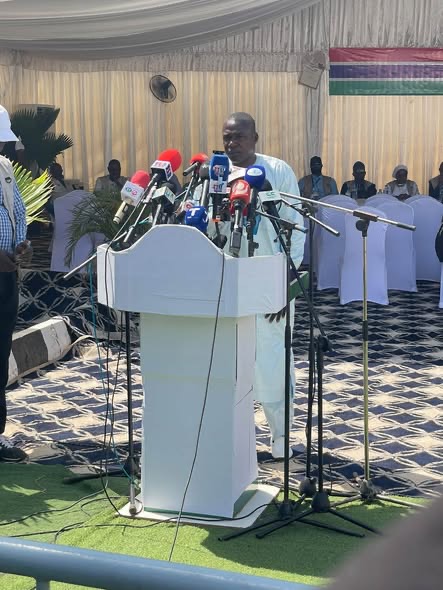
The second day of nominations reinforced this concern. Democratic Party leader Yusupha Dumbuya appeared before the IEC but could not complete the nomination process after failing to present key documents required by law.
According to proceedings before the Returning Officer, he was asked to provide proof of payment of the D1 million nomination deposit, present his voter’s card, reconcile inconsistencies relating to the presentation of his name and party symbol, and submit his Senior Secondary School Certificate. The IEC subsequently instructed him to address the deficiencies and return with the required documentation.
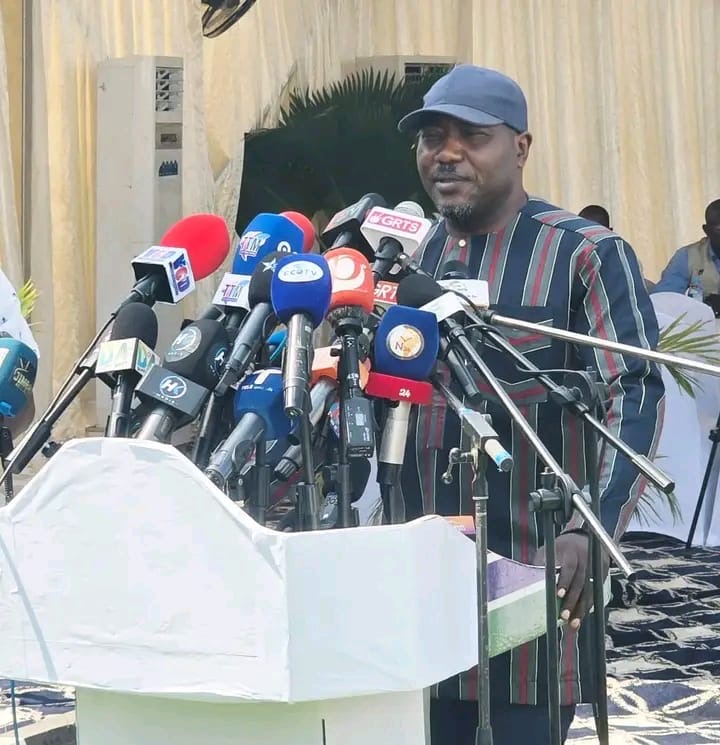
Former Vice President Dr. Isatou Touray also appeared before the Commission and was requested to submit additional documentation before her nomination could be finalised. The outstanding requirements reportedly included her original secondary school certificate, an affidavit confirming the consistency of her full legal name, and a notarised declaration of assets. Unlike some other aspirants, however, she had already paid the statutory D1 million nomination deposit required under the Elections Act.
These observations are not personal criticism of either aspirant, nor do they constitute any judgment on eventual eligibility, which rests solely with the IEC. Rather, they underscore a broader civic issue. None of these requirements emerged unexpectedly on nomination day. They are publicly known legal obligations set out well before the process.
When presidential aspirants arrive at Election House still seeking to satisfy fundamental nomination requirements, citizens are entitled to ask difficult but legitimate questions about organizational readiness, administrative discipline, and preparedness for the responsibilities of national leadership.
Another noteworthy feature of the day’s proceedings was the candidate’s engagement with the media. After appearing before the IEC, Dr. Touray departed from what has become the emerging norm among presidential aspirants. Rather than taking questions from journalists assembled at Election House, she delivered a prepared statement and left without engaging the press. To be clear, no aspirant is under any legal obligation to grant interviews.
Nevertheless, presidential elections are exercises in public accountability.
Journalists serve as an important bridge between candidates and citizens, and decisions to forgo media questions inevitably attract public interest because voters reasonably expect those seeking the highest office in the Republic to demonstrate not only readiness to govern but also willingness to engage public scrutiny.
If an aspiring president struggles with requirements known publicly for months, voters are entitled to ask how that same campaign intends to navigate the far greater complexities of governing a nation. Preparation is not a procedural technicality. It is one of the first tests of leadership. The most revealing aspect of nomination week may not be what happened inside the IEC, but what happened before candidates ever arrived there.
Every requirement confronted during nominations was already known. The Constitution was known. The Elections Act was known. The nomination deposit was known. The requirements relating to citizenship, voter endorsements, asset declarations, tax compliance, supporting documentation, and nomination procedures were all known in advance.
Yet several political actors arrived at nomination week still struggling with matters that should arguably have been resolved long before nomination day. This reality inevitably raises another democratic question. If a prospective president is not fully prepared for a process whose requirements are publicly available and clearly defined, how prepared is that political project for the far more demanding task of governing a nation? The question becomes even more relevant when viewed alongside the wider political landscape.
One enduring feature of the post-transition era has been the emergence of numerous smaller parties and political movements seeking national relevance. Democracy benefits from political diversity. New voices should be welcomed. Alternative ideas should be encouraged.The challenge is not their existence. The challenge is sustainability.
Many smaller parties and emerging movements have become increasingly effective at generating attention, social media engagement, endorsements, coalition discussions, and political visibility. Far fewer have demonstrated equivalent success in developing policy platforms, sustainable financing, nationwide structures, ideological coherence, civic education programs, and the institutional capacity associated with serious governing parties.
A Facebook following is not a constituency. A viral political message is not a manifesto. An endorsement is not a governing program. A coalition agreement is not an ideology. And a convoy is not a campaign. This is where the distinction between serious political organisations and what many Gambians have come to describe as sosalaaso and tef yengal political parties and movements becomes relevant.
The latter often emerge during election cycles with considerable publicity but limited evidence of nationwide structures, sustainable financing, ideological clarity, policy depth, grassroots organisation, or long-term institutional development. Their influence frequently derives less from independent electoral viability than from their potential relevance within broader coalition negotiations and political realignments. Such formations may achieve visibility. They may even achieve relevance. But visibility and relevance are not the same as readiness to form a government.
Coalition politics, of course, is not inherently problematic. Democratic systems worldwide rely on alliances and partnerships. The question is whether coalition-building emerges from organisational strength or from organisational limitations.
Historically, parties such as PDOIS distinguished themselves through ideological clarity, civic education, policy development, and institutional continuity. Whether one agrees with its politics or not, PDOIS demonstrated that political relevance can be built through long-term party-building rather than through electoral cycles alone.
The experiences of some “Sosalaaso parties and tefyengal political movements”, and several other smaller political formations, illustrate a different challenge. Many eventually find themselves navigating endorsements, alliances, coalition arrangements, and strategic realignments with larger formations. Such decisions may be politically rational and entirely legitimate.

Yet they also invite a broader democratic question: are political parties being developed as enduring national institutions with distinct programs and governing ambitions, or are they increasingly functioning as participants in a fluid marketplace of political alliances?
The nomination period has brought this question into sharper focus. In several cases, political energy appears concentrated on positioning, visibility, endorsement politics, coalition discussions, and public relations while the more demanding work of institution-building remains incomplete. Seeking political relevance is not improper.
However, relevance differs from readiness. Citizens are entitled to ask difficult questions. Can a party that struggles to organize itself effectively organize a government? Can a movement that depends primarily upon alliances sustain an independent governing vision?
Can a presidential campaign that encounters preventable administrative obstacles convincingly demonstrate readiness for the far more demanding responsibilities of national leadership? These are not partisan questions. They are democratic questions. Indeed, they go to the very heart of representative government.
The opening days of nominations may ultimately be remembered not for the fortunes of individual candidates but for the broader lesson they have provided about political leadership. Democracy benefits when participation is broad. But democracy is strengthened when preparation is serious.
The presidency of The Gambia is too important to be reduced to political theatre, social media visibility, coalition arithmetic, nomination-day excitement, or the pursuit of temporary relevance. It is a constitutional office entrusted with the security, prosperity, stability, and future of an entire nation.
Leadership requires more than aspiration. It requires preparation. It requires organisation. It requires ideas. It requires competence. Most importantly, it requires demonstrating long before nomination day that one is ready for the responsibilities one seeks.
The story of the first days of nominations is therefore not fundamentally about Salieu Jallow, Modou Lamin Sima, Yiramang Darboe, Musa Yali Batchilly, Ba Samba Drammeh, Mohamed Al Amin Bah, Yusupha Dumbuya, Dr. Isatou Touray, or any other individual political actor.
It is a story about standards. It is a story about whether Gambian democracy will reward spectacle or preparation. It is a story about whether political parties will be built as enduring institutions or assembled as temporary electoral vehicles. It is a story about whether leadership emerges from ideas, discipline, preparation, and competence, or from publicity, improvisation, and political convenience.
The first two days of nominations have supplied citizens with a useful test. Not a test of popularity, ideology, or campaign rhetoric, but a test of preparedness. The legal and administrative requirements of presidential nomination are among the most predictable obligations a candidate will ever face.
Yet even these have exposed weaknesses in planning, organisation, documentation, and compliance among several aspirants and political formations. That should concern voters not because perfection is expected, but because preparedness is.
For too long, political visibility has often been mistaken for political strength. A social media following has been mistaken for a constituency. A convoy has been mistaken for a campaign. An endorsement has been mistaken for a program. A coalition has been mistaken for an ideology. And too often, sosalaaso and tef yengal politics have been mistaken for serious institution-building.
Yet democracies are not governed by visibility. Institutions govern them. Ideas govern them. They are governed by preparation. They are governed by competence. The lesson of nomination week is therefore simple but profound. A convoy is not a campaign. Publicity is not preparation. Visibility is not viability. Coalition arithmetic is not governance. And presidential ambition, however genuine, is not a substitute for readiness.
In the final analysis, the road to State House should not belong to the loudest motorcade, the most fashionable movement, or the most visible coalition. It should belong to those who have done the harder work of building institutions, developing programs, earning public confidence, and preparing themselves for the solemn responsibilities of governing the Republic.
By Alagi Yorro Jallow
Alagi Yorro Jallow is a former journalist, author, communication lecturer, and public affairs commentator.


Discussion